
Prep School Basketball
Your bridge to playing basketball in college
The Challenge
Why So Many Talented Players Get Stuck Before College
That Moment When It Sinks In
Every year, there are athletes who reach the end of their high-school season and realize the college offers that are coming in aren’t the ones they hoped for, or worse, that they aren’t coming in at all.
For players, it’s frustrating. You know you can compete at the college level, but you haven’t had the opportunity to prove it.
For parents, it’s painful to see their child work so hard and not get the shot they deserve.
It’s a moment that leaves families asking the same question. What now?
A Second Chance — The Year That Changes Everything
That’s where a post-grad year comes in. It’s a second chance to grow, gain exposure, and show college coaches you belong.
Instead of rushing into the wrong fit or burning a year of eligibility at a junior college, this extra season gives players the time to get stronger, refine their game, and play in front of the right eyes.
It’s not about repeating high school. It’s about preparing for what’s next. For many families, that one decision becomes the year that changes everything.
See if a post-grad year is right for you. Get honest feedback on your level, goals, and the programs that fit best — no pressure, no sales pitch.
The Challenge
Why So Many Talented Players Get Stuck Before College
That Moment When It Sinks In
Every year, there are athletes who reach the end of their high-school season and realize the college offers that are coming in aren’t the ones they hoped for, or worse, that they aren’t coming in at all.
For players, it’s frustrating. You know you can compete at the college level, but you haven’t had the opportunity to prove it.
For parents, it’s painful to see their child work so hard and not get the shot they deserve.
It’s a moment that leaves families asking the same question. What now?
A Second Chance — The Year That Changes Everything
That’s where a post-grad year comes in. It’s a second chance to grow, gain exposure, and show college coaches you belong.
Instead of rushing into the wrong fit or burning a year of eligibility at a junior college, this extra season gives players the time to get stronger, refine their game, and play in front of the right eyes.
It’s not about repeating high school. It’s about preparing for what’s next. For many families, that one decision becomes the year that changes everything.
See if a post-grad year is right for you. Get honest feedback on your level, goals, and the programs that fit best — no pressure, no sales pitch.
A Hard Truth
A Hard Truth
Coaches see it too...

Today's Landscape

The Transfer Portal Changed Everything
The rise of the NCAA Transfer Portal has completely reshaped college recruiting. Most college coaches now build their rosters from experienced college players, not high school seniors. Instead of developing young talent, they’re filling open spots with athletes who already have game film, maturity, and proven production. It’s become a win-now system, and that means far fewer opportunities for high school athletes to be seen.

Why It Matters for High School Athletes
Even talented high school players are being overlooked simply because they don’t have college experience yet. For families, that means the old approach of hoping a coach finds you no longer works. To stand out, athletes need to show they can compete against top-level talent, handle college-style systems, and be physically ready to contribute right away.
And that’s exactly what a post-grad year provides. The ideal environment to grow physically, mentally, and technically, and the platform to showcase that growth in front of college coaches.
Today's Landscape

The Transfer Portal Changed Everything
The rise of the NCAA Transfer Portal has completely reshaped college recruiting. Most cCollege coaches now build their rosters from experienced college players, not high school seniors. Instead of developing young talent, they’re filling open spots with athletes who already have game film, maturity, and proven production. It’s become a win-now system, and that means far fewer opportunities for high school athletes to be seen.

Why It Matters for High School Athletes
Even talented high school players are being overlooked simply because they don’t have college experience yet. For families, that means the old approach of hoping a coach finds you no longer works. To stand out, athletes need to show they can compete against top-level talent, handle college-style systems, and be physically ready to contribute right away.
And that’s exactly what a post-grad year provides. The ideal environment to grow physically, mentally, and technically, and the platform to showcase that growth in front of college coaches.
75%+
Rise in NCAA transfers since the launch of the transfer portal, which directly impacts the number of roster spots for high-school athletes.
95%
Of PREP Athletics Alumni Play in college
75%+
Rise in NCAA transfers since the launch of the transfer portal, which directly impacts the number of roster spots for high-school athletes.
95%
Of PREP Athletics Alumni Play in college
The Benefits
The Benefits
What Makes U.S. Prep Schools the Clear Advantage
Prep schools give international athletes the environment, coaching, and academics they need to develop like college players, years before they get there. Each school combines daily training, elite education, and high-level competition that attracts college recruiters from across the country.

College-Level Competition & Recruiting Exposure
Prep schools play in national-level leagues filled with college-bound talent. Facing better opponents every game week accelerates player development. And because so many top programs are concentrated in one region, college coaches routinely attend games, tournaments, and showcases to find their next recruits. It’s a built-in recruiting network.

Elite Training & Facilities
Athletes train daily in state-of-the-art facilities under coaches with college and professional experience. The regimen mirrors a university system: weight training, skill development, film sessions, and recovery. Every piece is designed to prepare athletes physically and mentally for the intensity of college sports.

Elite Academics & Education
Prep schools pair athletic excellence with elite academics that match or exceed college standards. Smaller class sizes and strong faculty support help international students adapt to the U.S. classroom and strengthen their English communication. It’s an environment where athletes grow as students, learn accountability, and build the academic foundation colleges respect.

Personal Growth & Maturity
Living on campus teaches independence, discipline, and leadership. Athletes manage their schedules, communicate with coaches and teachers, and learn the habits that separate successful college players. Families see real growth, not just in athletic ability, but in responsibility, confidence, and focus.
Our Reputation
Our Reputation
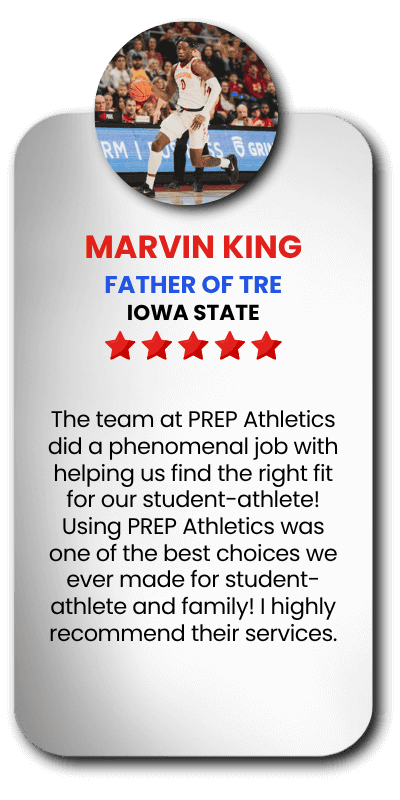
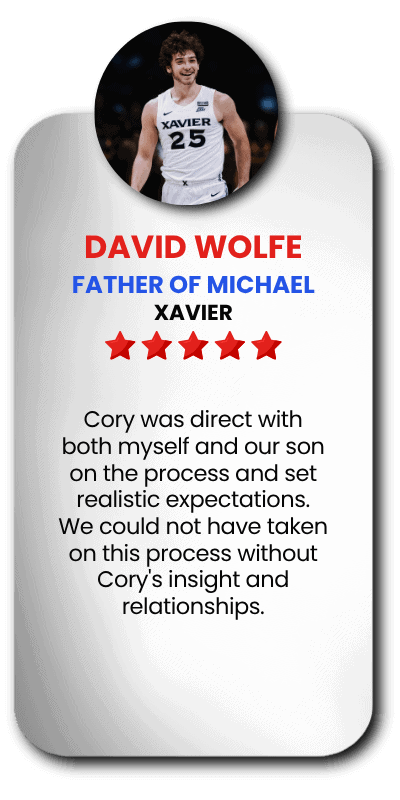
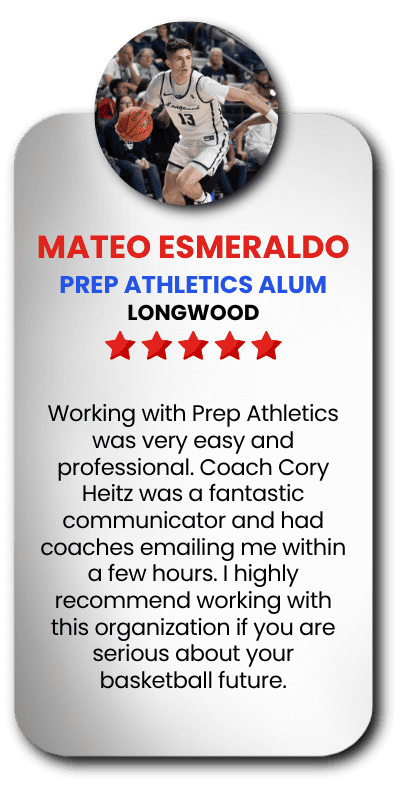
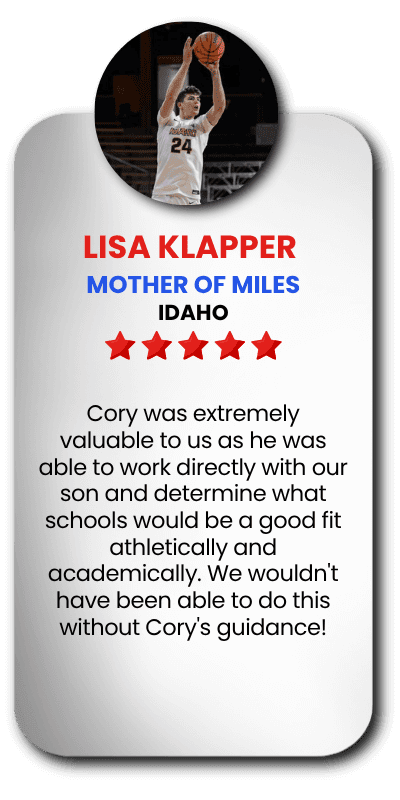
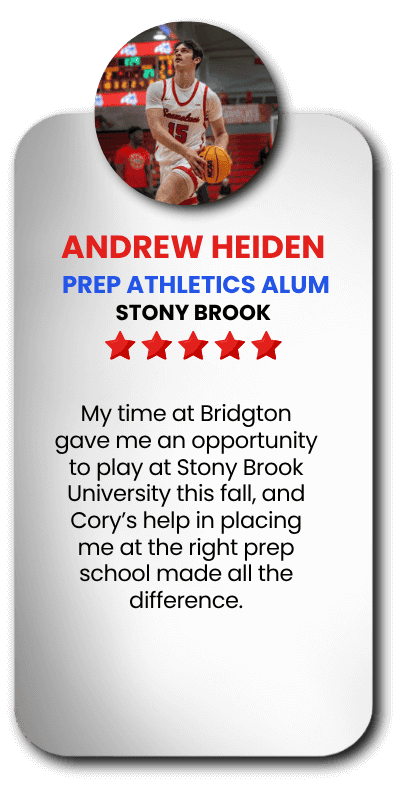
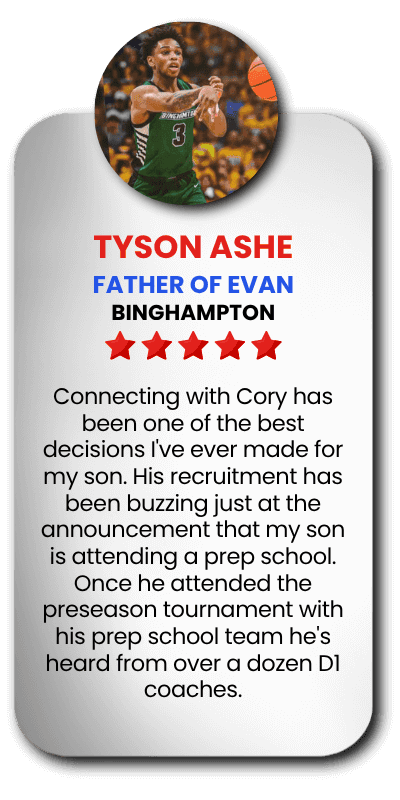
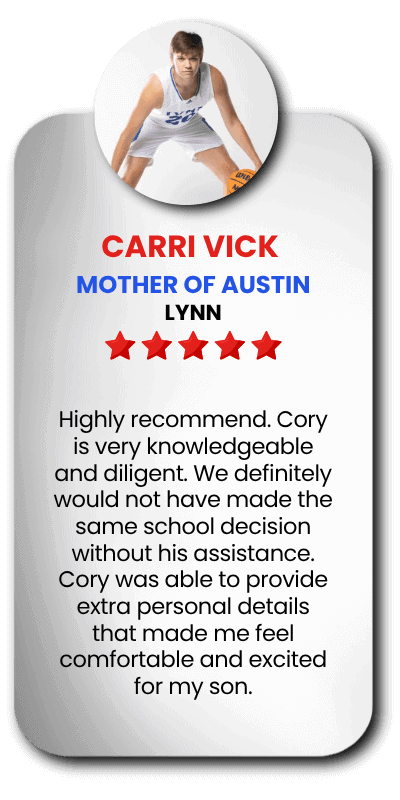
HEar what players and Parents have to say...






The Benefits
The Benefits
What Makes U.S. Prep Schools the Clear Advantage
Prep schools give international athletes the environment, coaching, and academics they need to develop like college players, years before they get there. Each school combines daily training, elite education, and high-level competition that attracts college recruiters from across the country.
College-Level Competition & Recruiting Exposure
Prep schools play in national-level leagues filled with college-bound talent. Facing better opponents every game week accelerates player development. And because so many top programs are concentrated in one region, college coaches routinely attend games, tournaments, and showcases to find their next recruits. It’s a built-in recruiting network.
Elite Training & Facilities
Athletes train daily in state-of-the-art facilities under coaches with college and professional experience. The regimen mirrors a university system: weight training, skill development, film sessions, and recovery. Every piece is designed to prepare athletes physically and mentally for the intensity of college sports.
Elite Academics & Education
Prep schools pair athletic excellence with elite academics that match or exceed college standards. Smaller class sizes and strong faculty support help international students adapt to the U.S. classroom and strengthen their English communication. It’s an environment where athletes grow as students, learn accountability, and build the academic foundation colleges respect.
Personal Growth & Maturity
Living on campus teaches independence, discipline, and leadership. Athletes manage their schedules, communicate with coaches and teachers, and learn the habits that separate successful college players. Families see real growth, not just in athletic ability, but in responsibility, confidence, and focus.
Our Track Record
Our Track Record
PREP Athletics alums have played at schools like...


Have Questions?
Have Questions?
Here are the answers to the most common questions families ask about post-grad placement.
Here are the answers to the most common questions families ask about post-grad placement.
What is a post-grad basketball program?
A post-grad year at a prep school is where a student athlete can spend nine months improving as a player and person. This is the year after high school and before college: some call it a fifth year. One of the benefits is that this year does not count against a player’s NCAA eligibility as currently, playing at a junior college does. This year is a chance for players to leave home and improve their chances of playing at the college level. A post-grad year can be completed at a prep school or at a basketball academy. Some academies are not associated with a school and are more basketball focused. (See my articles/podcasts on basketball academies.) Before the year starts players have an extra spring and summer to play AAU and attend NCAA certified camps. This extra exposure is what most players are looking for. Prep school teams also get together during the live scholastic period in June. This is an opportunity that gives players a chance to play with their future teammates under their prep school coach, all in front of college coaches from all over the US. Once players arrive at a prep school, the open gym period begins. This gives players a chance to play with their new teammates, work on their skills during individual sessions, and get stronger in the weight room. This is also the time when college coaches come to campus to recruit players. Ideally your prep school coach will formulate a recruiting plan with you and your family to figure out what level of schools he will reach out to. If you have talent and are eligible there is a good chance multiple college coaches will be in the gym to see you play. Coaches from all over the country fly to prep schools each year to find players because they know the coaching and competition are consistent. Plus, players who are spending time away from home won’t be homesick when they step on a college campus for the first time. Players are also better prepared to step in right away and contribute in a college setting versus a player straight out of high school.
When should basketball players do a post-grad year?
Doing a post-grad year makes sense for some players, but not all. The reason usually depends on what the goal of the player is. The main goal of most players is to get a scholarship to a Division 1 school. Going to a prep school will give a player exposure during the additional AAU/camp season and when the post-grad year starts. If a player already has D1 offers they will hopefully bump up a level or gain more offers from the level they are currently at—if they have the right skillset and size, a post-grad year could take a low major player and bump him up to a mid to high major player. A kid with D2 offers might get a D1 offer. Players who have D3 looks might have a chance to bump up to a scholarship. Some players might not have any offers and will be open to seeing what schools reach out to them during this year.
Aside from getting exposure and trying to bump up a level, players will have schools from other parts of the country see them. Most offers players earn in high school are regional, but leaving your state and going to a prep school will allow many more potential schools to see you. In the Boston area alone there are thirty-five colleges. Some states don’t even have this many institutions.
Players also should consider a post-grad year if they need to improve a certain skillset. Some need to improve their handle, shot, speed, strength etc. On a personal note, I graduated high school at 6’7’’ 195 lbs. During my post-grad year, I put on twenty pounds of muscle and played every day in practice against other D1 caliber players. Everything about my game improved.
Another example of a player who would benefit from a post-grad year is one who needs to get eligible for the NCAA. These players can go the JUCO route or do a post-grad year as long as they are not too far behind in their core classes. Getting a player’s grade point average increased and scoring higher on a standardized test will open up the possibility of going to schools that require higher academic requirements.
Some players graduate high school young for their grade. They need this extra year to catch up to their peers on the court. This year is about players betting on themselves.
When basketball players should not do a post-grad year
A post-grad year is not for everyone. If a player is not going to bump up a level, a family needs to determine if the financial investment/time is worth it. If you are a D3 level player and you don’t have the size or skillset to obtain a scholarship then a post-grad year might not be right for you. This year does not guarantee a scholarship. Many D3 level kids do choose to do a post-grad year to expand their options of D3 schools. After a post-grad year, they will step into a college setting more likely to contribute their freshman year.
While most players would benefit from a post-grad year, it doesn’t make sense for some who have signed with a good school and will be able to contribute right away.
What are the benefits of attending a post-grad year versus attending a junior college?
The main reason to complete a post-grad year instead of going to a junior college is that the player does not lose NCAA eligibility. Once you play in a junior college game you have lost a year of playing in the NCAA. A couple of reasons players choose junior college is that they need to drastically improve their grade point average, get their standardized test scores up to the minimum NCAA limit, or they don’t have the finances to pay for tuition at a prep school.
The academics at a prep school are going to be, on whole, more challenging than what is offered at a junior college. This is due to the following:
The standards to get into a prep school are quite high at most places. They do not take everyone that applies.
There will be students from many states and around the world where junior colleges mostly serve their region.
Jucos have been dubbed “Last Chance U.” Some athletes have been at other schools, need to become eligible or have had other issues that are keeping them from going directly to college. There are some that are solid situations and others are rougher around the edges. A prep school is very cognizant of who they want as a part of their student body. At this point in time we are still awaiting a decision to see if Juco eligibility will still count against NCAA eligibility.
What is the difference between a prep school and an academy?
Completing a post-grad year can be accomplished at either a prep school or a basketball academy. Some prep schools have existed for over two hundred years and have a fully accredited, academic staff. They have state regulations to follow and most have a “principal and a prom.” Students stay in dormitories and have a fixed academic schedule. These schools have outstanding reputations and long histories of success, both academically and on the basketball court.
Academies on the other hand are more focused on basketball training. While some of these academies offer a good experience, they do not all have the strict accountability that prep schools do. A person can start an academy tomorrow. All they need is a place to house the players, a van, and a basketball court. They don’t need to hire teachers or a principal. Some academies offer online classes, access to local community colleges and standardized test prep. It is very important if you are looking at an academy to ask them about their academic structure. Some academies are reputable, and others have popped up overnight looking to take advantage of families. Generally, you can get into an academy cheaper than you could at a brick and mortar prep school. That is what makes this option attractive to a lot of families. But not all prep schools or academies are created equal. Find out the history of the coaches and who will be supervising the players when they are not in the gym. See what the room and board situation is. Are players eating pasta and cereal for all of their meals? Are meals even covered? Do your due diligence and ask around. PREP Athletics can help you navigate the complex world of prep schools and these basketball academies. Check out articles here and here to find out more about the basketball academy world.
What should basketball players expect during a post-grad year?
If you sign with a prep school before you graduate high school then you should talk to the coach about how to plan your summer. AAU teams, prep school live period, and elite camps are vital for being seen by college coaches. Since the prep school coach’s job is to get his players to the next level, he will have a good idea of what level a player is before school begins in the Fall. Ideally you will tell your prep school coach your goals and what college programs you want them to reach out to. The coach will then tell you if it makes sense to attend any of these colleges’ elite camps. Most of these camps have staff members from multiple colleges and at all levels working them. The prep school coach will also let college programs know of your interest and invite them to the open gyms during the Fall.
Once you arrive at a prep school in the Ffall you will go through orientation then get into the routine of classes and workouts. A valuable time for players is the open gyms in the Fall. These are important as college coaches from all over the US descend on these schools to look for recruits. Offers can be made. One of my clients did so well during open gym that he signed with a D1 school in September after only two weeks of open gym at his prep school. During this fall period prep school coaches will get their players in shape through conditioning and stronger in the weight room. At this age players will be more inclined to put on muscle since they are maturing as young men.
Once official practice starts then the routine will be similar to high school. This includes classes and practice each day. The basketball season will be similar to high school as well. It will just be better competition than most players are used to. There will be fall, winter and spring breaks. Once the season ends, prep schools will go back to having open gyms. Once the year is over there will be a graduation ceremony and the next stage of life will begin!
Since 2021 recruiting has changed. Post pandemic, the transfer portal has blown up and colleges are more frequently choosing established college players over high school aged kids. With this new landscape players need an advocate helping them get placed. There are no better advocates in the US than a prep school coach. You will get placed if you attend one of these prep schools.
How basketball players can choose the right post-grad option
When a family hires me to find them the right fitting prep school, I begin by finding out the player’s goals. Once I have the total profile of a player I will go through my database of schools and pick out five to ten that would be ideal for this particular player. I then reach out to these school’s coaches on the player’s behalf. A player will eventually have between two to five schools interested in them. At this point, I discuss the pros and cons of each option with the family and they will eventually decide which schools to apply to.
A family will then complete all the necessary applications and financial aid forms. If they can, they will ideally visit these schools. Once the acceptance letters come out on March 10th, families will be able to see which schools accepted them and the amount of scholarship they are awarded. Based on this, the family will decipher all the information they have gathered during the previous few months and make a decision. It could be based on the specific coach, the school’s culture, or the total tuition amount. It is up to each family to determine what school is right for them. Some prep schools have rolling admissions and can let a player know if they are accepted and at what price in a matter of weeks. I am there for families through this entire process.
Some families ask me which school I think their child should attend. I always defer on this question. If a player attends any of the schools I have connected them to, they will be in a position to have a successful experience at prep school. But I want the family to feel comfortable with the decision and take agency. The ideal position in my opinion is when a family has a tough decision to make between schools. That means they have great options to choose from! I have experience in helping families with these challenging decisions.
With prep schools all having advantages, it might be hard for a family to choose which one to attend. The line I share with families is that they should choose the prep school based on the player’s connection with the coach. The coach will be doing early morning workouts, determining playing time, and ultimately calling college coaches on a player’s behalf. This is more important than a school’s name, basketball record, location, and more.
Do basketball players need to visit a school for a post-grad year?
If you were going to a prep school for multiple years I would say yes. But is it not mandatory for those wanting to do a post-grad year. A post-grad year only lasts nine months, so it isn’t dire if you can’t make it to the school beforehand. With today’s technology and information, most of these schools have plenty of information and videos on their website and YouTube channel. It is an arms race to get the best and brightest at these schools. They want to put as much information on the internet for families to make an informed decision in case they can’t visit the campus.
The best time to visit schools is before the basketball season starts. Once that begins it will be hard for a player to get away without missing games and practice. Applications need to be into most schools by January and February. Visiting isn’t a requirement, but it can aid a family’s decision once the acceptance letters come out. Some military schools require a player to visit before they make an offer as the lifestyle there is different from other schools.
After a family receives an offer from a prep school, which for most is March 10th, they can then visit the school before the April 10th deadline.
Can international players do a post-grad year?
International basketball players can absolutely do a post-grad year. They will need to have graduated high school in their home country and not be older than a school or league’s age limit. If the player is coming from a country that does not have English as its official language, most schools will require that they will have to prove their language aptitude via a TOEFL (Test of English as a Foreign Language) or Duolingo test. Schools also conduct video interviews to assess a potential student’s English proficiency. The reason for this is that the schools want the player to succeed when they arrive. If the player does not speak English it will make the year that much more difficult both on the court and in the classroom. If the player speaks English, has graduated, and has the skill set that the basketball coach wants then he will be very attractive to a prep school. Each prep school will have a different set of financial requirements. Some give aid to international players while others save that for domestic students only. It depends on multiple factors and I can help you determine if this option makes sense.
How PREP Athletics can help basketball players find the right fitting post-grad program
As explained above, this can be an overwhelming process. Which institutions are prep schools and which are basketball academies? How much does this school cost? Is this school just need based or merit based? What style best fits a player’s style on the court? Who has had success getting players placed in college basketball programs? What is the personality of each prep school’s coach? What is the school and team’s culture? Figuring all this out can be very stressful for families and almost impossible to find on Google or ChatGPT.
This is where I can help. I went to a prep school to complete a post-grad year in 1995-96. I know first-hand how the experience is and how I benefited. I have been placing players since 2008 into all different types of prep schools around the country. At the time of this writing I have placed players into over fifty nine different prep schools. My only focus is placing players into prep schools. I don’t do placement for AAU teams or college programs. I have visited over 100 prep schools throughout the years and have spent time watching many of these teams in action. I can help your family navigate all of these schools once I know the player’s goals and complete profile. My relationship with these prep school coaches ensures that they will give me quick feedback on which programs are truly interested in your child. I will tell you the pros and cons of each school and why I chose it as an option for your player. Once the acceptance letters come out I will guide you through choosing the right school and in some instances help you negotiate a lower tuition rate. Prep schools want certain students and will on occasion match another school’s financial offer in order to get them.
I also love helping families through this process! My cousin Brad Miller attended a prep school for his senior year of high school. This led to him receiving a scholarship to Purdue University then playing 14 years in the NBA. He credits his year at prep school for making his dream of playing in the NBA a reality. The coaching he received and the competition he played against helped him contribute immediately in college and win Co-Big 10 Freshman of the Year honors. Our family’s trajectory has changed greatly due to prep schools. Completing a post-grad year was the best path for me in order to reach my goal of playing in a D1 program at the US Air Force Academy.
I started PREP Athletics to help families fulfill their dreams. I only take on clients that I feel can benefit from this path. I am upfront with families on the player’s potential and whether or not I can help them find a good fitting school. Many coaches and family members will suck up to a player to not hurt their feelings. I believe in speaking the truth to a player early. They can either sink from the criticism or rise to do all they can to reach their dreams. I remember the stress of trying to get scholarship offers. It is a challenging time in a young player’s life. But I have seen many players put in the work on and off the court in order to reach their dreams.
Ready to take the next step?
Your Bridge to College Basketball
Your content goes here. Edit or remove this text inline or in the module Content settings. You can also style every aspect of this content in the module Design settings and even apply custom CSS to this text in the module Advanced settings.
WHy Prep School?
Your Title Goes Here

Post-Grad Placement
Want to Play College Basketball but Need More Time? A Post-Grad Year Could Be Your Game-Changer.
✅ Gain an Extra Year of Development (Without Losing NCAA Eligibility)
A post-grad year lets you refine your game, sharpen your body, and improve your basketball IQ—all while preserving four full years of college eligibility.
✅ Boost Your Recruiting Exposure
Top prep schools play elite national schedules and are heavily scouted by college basketball coaches at all levels—D1, D2, and D3. Many post-grads go from overlooked to recruited within a single season.
✅ Improve Academics & Test Scores
Prep schools offer structured environments to raise your GPA, retake the SAT/ACT, and become academically eligible for NCAA requirements—especially helpful if you’re just shy of the mark.
✅ Compete Against Older, Stronger Players
Post-grad basketball is fast, physical, and mature. Playing in this environment prepares you for the intensity of college hoops—both mentally and physically.
✅ Get Clarity on Your Future
Whether you need more time to grow, want to change positions, or just didn’t get the offers you hoped for, a post-grad year gives you a reset without a regret.

Transfer Placement
Not in the Right Situation? Transferring to a Prep School Could Unlock Your Potential.
✅ Level Up Your Development & Competition
Prep schools offer elite coaching, year-round training, and top-tier competition—giving you the structure and exposure to reach your full potential.
✅ Play a National Schedule Against Top Talent
You’ll face off against the best prep programs in the country, often in front of college coaches, scouts, and media, accelerating your recruiting timeline.
✅ Reclassify for Long-Term Benefits
Transferring early allows you to reclassify, giving you an extra year of growth, strength, and skill development before college—something many D1 players have done.
✅ Thrive in a Proven Basketball Environment
Unlike traditional high schools, prep schools are built for basketball success, with built-in strength training, recovery, academics, and accountability.
✅ Open More College Doors
A better situation means better results—more minutes, more development, and more college interest. The right prep school can change your trajectory.
95%
Of PREP Athletics Alumni Play in college
$5 million+
in financial aid & tuition costs saved
95%
Of PREP Athletics Alumni Play in college
$5 million+
in financial aid & tuition costs saved
Who We Help
Who We Help

Players
Dreaming of playing college basketball but not sure how to get noticed?
That’s where PREP Athletics comes in. We connect you to the right fitting prep school opportunities that sharpen your skills, build your strength, and give you the exposure you need. A prep school experience prepares you physically, mentally, and academically so you are fully ready to succeed at the college level.

Parents
Want to help your student-athlete reach their dream of playing college sports, while giving them an elite education?
You don’t have to figure it out alone. We walk families through the entire process, from honest evaluations to school recommendations, to help your child grow, mature, and maximize his potential on and off the court.

High School Coaches
Got talented players but no time or traction with college coaches?
We get it — your plate is full. PREP Athletics helps place overlooked players into strong prep programs that develop talent, increase exposure, and open real recruiting doors. You stay focused on your team. We help expand their options.

Prep School Coaches
Need quality prospects without spending hours sorting through the wrong ones?
We know your time is limited. PREP Athletics connects you with athletes who fit your program’s academic and athletic needs, saving you time and bringing in players ready to contribute. We handle the early legwork so you can focus on coaching and building a winning culture.
Our Reputation
Our Reputation
What Players an Parents are Saying


As Seen In
As Seen In


Find Your Fit
Find Your Fit
Get Your Free Personalized Prep School Assessment
Finding the right prep school basketball opportunity starts with understanding your complete situation. Our free assessment collects key information about your athletic abilities, academic standing, and financial considerations to provide targeted guidance specific to your circumstances. This approach allows us to cut through the recruitment noise and give you honest, practical feedback about your options. Most families find that this comprehensive evaluation saves them time and helps avoid mismatched programs that waste valuable development years.
Get Your Free Personalized Prep School Assessment
Finding the right prep school basketball opportunity starts with understanding your complete situation. Our free assessment collects key information about your athletic abilities, academic standing, and financial considerations to provide targeted guidance specific to your circumstances. This approach allows us to cut through the recruitment noise and give you honest, practical feedback about your options. Most families find that this comprehensive evaluation saves them time and helps avoid mismatched programs that waste valuable development years.
FAQs
FAQs
What is a prep school, and how is it different from regular high school?
A prep school is a college-preparatory environment with stronger academics, structure, and, at most places, serious basketball. You’ll see smaller classes, built-in accountability, and a daily rhythm that prepares students for college life. The basketball focus is on development, competition, and exposure that lead to real recruitment, not just more games.
How does PREP Athletics help our family, specifically?
We evaluate your student-athlete’s skillset, academics, goals, and budget, then target schools where they can realistically play, develop, and succeed. We cut the noise, make intentional introductions, refine film and profiles, and coach you through visits, timelines, and decisions. We give straight answers, especially when “no” is the right one.
Will a prep school or PG year actually improve recruiting?
Yes. With AAU, summer scholastic live periods, showcases, open gyms, and the regular season, college coaches from across the country will see prep school players in action, something 95% of traditional high schools can’t match. Prep school coaches also play a key role in helping players find the right-fit college program. In today’s game, where money, transfers, and older rosters are common, having an experienced advocate matters more than ever.
Can you get my child a D1 scholarship?
We don’t guarantee offers, and no one ethical should. We tell the truth about level, build a plan to improve the profile, and place the player where they can potentially earn it. Scholarships happen when talent, role, health, grades, and timing align. Our mission: the right level, the right role, the right school, whether D1, D2, D3, or NAIA.
Who is a good fit for PREP Athletics, and who isn’t?
Good fit: coachable, competitive, academically engaged, open to honest feedback. Families who value development over hype and understand there’s more than one path to college.
Not a fit: families seeking guarantees, “D1 or nothing,” or who ignore academics. We won’t tell you what you want to hear; we’ll tell you what you need to hear.
When should we start this process?
Earlier is better. For fall enrollments, most families start 9–12 months ahead. PG decisions often happen winter through spring of senior year. That said, we’ve placed players at all times of the year. No matter your timing, reach out for a quick, honest answer on your situation.
How much does prep school cost, and is financial aid realistic?
Tuition varies widely. Many schools offer need-based aid, and some provide merit scholarships, but competition is strong and paperwork matters. We align your budget + academic/athletic profile with schools where aid is realistic and the basketball fit makes sense. No false promises, no bait-and-switch.
How important are grades and academics?
Critical. Coaches ask about transcripts and character before watching highlights. We make sure your student is on track with the right coursework, help avoid NCAA pitfalls, and only pursue schools where they can thrive in the classroom. We also partner with programs that support students with learning differences, autism, or executive-functioning challenges, which are more common than many realize.
Do you only work with basketball players?
Yes. Basketball is our specialty. If your athlete competes in another sport, we’ll connect you with better-suited experts rather than pretending we can do it all.
How do you evaluate level and fit?
We start with film and context: skills, motor, decision-making, body type, competition level, and role, plus academics, maturity, and goals. We place players on the path that fits their current ability, with a plan to move up if they earn it.
How are you different from recruiting services or agents?
We work for your family, not for a school or hype machine. No mass emails, no spray-and-pray lists. Every outreach has a purpose, and every school we recommend has a reason behind it. Our edge is candid evaluation, real relationships, and a process that respects your time and money.
Cory’s perspective comes from experience. He completed a post-grad year before playing Division I basketball, and his cousin played four years of D1 then 14 years in the NBA. Prep school changed their family’s trajectory, and we want to help yours do the same.
What’s the first step?
Start by filling out our free assessment. Once we’ve reviewed your highlights, grades, and financial picture, we’ll schedule a strategy call, outline your best path forward, and build a realistic shortlist. You’ll leave with a clear, customized action plan.
Do you work with international families?
Yes. We help with academic conversion, English proficiency expectations, logistics, and identifying where your game best translates. We’re honest about timing and paperwork so you don’t waste a year.
What if we’re late, or the season didn’t go as planned?
It happens. We’ll assess your current window, identify what’s still possible, and prioritize the options that offer the greatest return, whether that’s a late prep opportunity, a PG plan, or an alternate college path.