How Prep School Can Change a Player’s Recruiting Path

One of the biggest misconceptions in basketball recruiting is that if you’re good enough, college coaches will eventually find you.

In reality, the process rarely works that way. Talent absolutely matters, but exposure, development timing, and environment often matter just as much. Every year we speak with players and families who feel stuck in the recruiting process. The player works hard, produces on the court, and loves the game, yet the recruiting attention hasn’t materialized.

Sometimes the issue is competition level. Sometimes it’s academics. Other times, coaches simply haven’t had the chance to evaluate the player.

That’s where prep school can completely change the picture.

On a recent episode of the PREP Athletics Podcast, I sat down with Darrow School head coach Antonio Anderson to talk about the prep school path and how it impacts recruiting. Antonio has experienced basketball at nearly every level of the game. He won a state championship in Massachusetts, went on to play at Memphis, appeared in a national championship game, spent time in the NBA and G League, and now helps guide players through the prep school process.

What makes his perspective particularly valuable is that prep school played a major role in his own recruiting story.

And his experience highlights something we see over and over again with players navigating recruiting.

Sometimes the right environment changes everything.

When Talent Isn’t the Problem

Antonio had already experienced success in high school basketball. Winning a state championship proved he could compete, but that success didn’t automatically translate into recruiting attention.

Part of the challenge was visibility. Antonio attended a vocational high school, which meant college coaches weren’t regularly passing through the gym to evaluate players there. Without that exposure, even talented players can go unnoticed.

Eventually he realized he needed a different environment if he wanted to expand his opportunities.

“You know, I wasn’t really getting recruited… I went to a vocational high school, so I decided to go to MCI and redo my junior year.” 

That decision placed him on the prep school path, something many players consider when they feel like their recruiting momentum has stalled.

Prep school doesn’t necessarily change who a player is. More often, it changes where that player is competing and who is watching.

And sometimes that shift makes all the difference.

The Year That Changed Everything

When Antonio entered prep school, he wasn’t arriving as one of the most highly ranked prospects in the country. His recruiting situation at the time was far more modest than people might assume given the career he eventually had.

“I wasn’t a five-star recruit. I wasn’t number one in the country. I went into prep school with Division III opportunities.” 

That position is familiar to many players. They might have ability, but they haven’t yet had the chance to prove themselves consistently against high-level competition.

Prep school changed that environment almost immediately.

The competition level improved. The exposure increased. And college coaches had more opportunities to evaluate him against players who were also trying to reach the next level.

The result was dramatic.

“A year later, I was committed to Memphis.” 

One year.

That was all it took to completely change the trajectory of his recruiting path.

What Actually Changes at Prep School

When people hear about prep school basketball, they often assume it simply means more basketball. More practices. More games. More travel.

But the biggest difference is the environment surrounding the player.

Prep school programs create a setting where athletes are surrounded by other players who share the same goal: playing college basketball. The level of competition rises immediately, and the expectations for preparation and discipline follow closely behind.

At Darrow, Antonio emphasizes development that extends beyond the basketball court.

“We try to develop better people first… people who care about being a good person, being a good student, and becoming a better basketball player.” 

That philosophy shapes the entire structure of the program. Players are responsible for academics, strength training, conditioning, and daily habits that prepare them for the college level.

By the time the season begins, they’re already operating within a system that mirrors many aspects of college basketball.

And that preparation accelerates development.

What Coaches Actually Look For

Another misconception in recruiting is the belief that rankings determine everything.

Antonio sees the process differently.

When he evaluates players for his own program, the first trait he looks for isn’t a star rating. It’s competitiveness and mentality.

“Tough guys… not physically, but mentally. Guys who just love competing.” 

Mental toughness often becomes the separating factor when players transition into higher levels of basketball. Talent might get someone into the gym, but competitiveness determines how they perform once they get there.

Antonio also pointed out something that many players need to hear.

“Nobody really cares if you’re three-star, four-star, five-star… if you can play basketball and you’re willing to work and compete, I’d love to have you.” 

Rankings can shape early perception, but they don’t determine how a player develops once the opportunity appears.

That’s why environment matters so much.

Exposure Is Part of the Process

Another major difference in the prep school model is the amount of work that goes into promoting players.

College coaches cannot evaluate every player in the country. Even talented athletes can remain under the radar if the right people never see them play. Strong prep programs recognize this and actively work to make their players visible.

Antonio described how much outreach goes into helping players get opportunities.

“I literally go through Division I, II, III… all over the Northeast, the Midwest, everywhere and email every coach.” 

That outreach includes sending film, sharing schedules, and distributing livestream links so college staffs can evaluate players even if they cannot attend games in person.

Some coaches respond immediately. Others take time.

But the goal remains the same.

Make sure the players are visible.

Because recruiting opportunities often begin with one simple moment: a coach seeing a player compete.

Opportunity Still Requires the Right Mindset

Even in the best prep school environment, nothing replaces a player’s work ethic.

Prep school can provide competition, development, and exposure. It can place players in front of college coaches and give them opportunities they might not otherwise have.

But ultimately, the player still has to take advantage of those opportunities.

Antonio is very clear about the type of athletes he wants to work with.

“If you’ve got the work ethic and the mentality to want to be great, I’m all for helping those type of players.” 

That mindset is exactly what allowed him to transform his own recruiting path years ago.

And it’s the same mentality that continues to separate players who benefit most from prep school today.

Sometimes One Year Changes Everything

Every recruiting journey unfolds differently. Some players receive significant attention early in high school, while others take longer to develop and need more time to reach their full potential.

Antonio’s story is a reminder that recruiting timelines are rarely linear.

Sometimes the difference isn’t talent.

Sometimes it’s environment.

Prep school can provide stronger competition, structured development, academic support, and meaningful exposure to college coaches. For many players, that additional year becomes the bridge between being overlooked and being recruited.

Antonio entered prep school with Division III opportunities.

One year later, he was committed to Memphis.

And for the right player, that kind of transformation is still possible today.

If you’re looking into prep school, reach out to us at PREP Athletics. We’re here to help you explore your potential and make choices that align with your athletic and academic future. We’ve also got a long list of resources to get you started in the right direction, so check out our latest prep basketball updates on YouTube or our podcast to dive deeper.

PODCASTS

Bill Hanzlik: Former Nugget on What NBA Teams Look For & Choosing Prep School for His Son

https://youtu.be/Mwc-6r8lHv8 Audio Only Download Listen On Apple  Listen On Spotify Listen On Amazon ▶️ Show Notes What NBA teams look for goes beyond talent. Former Denver Nugget Bill Hanzlik joins PREP Athletics to talk about player potential, work ethic,...

Garvin McAlister: Millbrook’s Head Coach on Playing Multiple Sports & Athlete Development

Garvin shares his insights on student-athlete development tips, multi-sport training, and preparing high school athletes for success both on and off the court.

Paul Biancardi, ESPN National Director of Recruiting, featured on a PREP Athletics podcast thumbnail with a high school basketball gym background.

Paul Biancardi: ESPN Recruiting Director on What Coaches Really Want

ESPN’s Paul Biancardi joins the PREP Athletics Podcast to reveal what college coaches look for in recruits and how to stand out in the scouting process.

George White, founder of RecruitU and former D1 coach, discussing NCAA’s 5-and-5 rule on the PREP Athletics Podcast, with a basketball player in action and a crowd in the background.

George White: D1 Coach Breaks Down NCAA’s New Eligibility Rules

Former Harvard player & D1 coach George White breaks down the NCAA’s 5-and-5 rule and its impact on prep basketball.

Promotional thumbnail for Prep Athletics Podcast featuring John Carroll and Jason Smith with the Masters Academy International logo and a basketball gym background.

Jason Smith & John Carroll: How MAI is Redefining Basketball Development

Jason Smith & John Carroll reveal how MAI is revolutionizing prep basketball with elite training, academics, and college placement.

Avon Old Farms Head Coach Matt Mihalich and a player in action during a basketball game, featured on the PREP Athletics Podcast.

Matt Mihalich: Avon Old Farms Coach on Playing Time, Reclassifying, and College Placement

Get insider prep hoops tips from Avon Old Farms Coach Matt Mihalich on playing time, reclassifying & college placement—only on PREP Athletics.

Cory Heitz of PREP Athletics in a grey suit against a cinematic high school basketball gym background with "Recruitment Insider Tips"

Cory Heitz: Prep School Recruiting & NCAA Rule Changes Explained

Cory Heitz updates on the Final Four showcase, the new MAI program, and advice on navigating prep school second teams and NCAA eligibility rule changes.

Robert Icart on the PREP Athletics Podcast discussing AAU basketball truths, featuring a high school basketball player in a BTI jersey driving to the hoop in a crowded gym.

Robert Icart: 25+ Years of AAU Wisdom—How to Pick the Right Team & Prep School

Robert Icart shares 25+ years of AAU wisdom on picking the right team, the benefits of prep school post-grad years, and building life skills after basketball.

Coach Jim Driggs of Albany Academy Basketball on the Prep Athletics Podcast discussing NEPSAC recruitment and player development.

Jim Driggs: Albany Academy Coach on Prep School Basketball Truths

Coach Jim Driggs discusses Albany Academy’s move to NEPSAC AA , reclassification benefits , and the toughness needed for D1 basketball.

Kenyon Murray discusses NBA Dream Blueprint on PREP Athletics Podcast with son in Murray Elite basketball jersey

Kenyon Murray: NBA Father & Prep School Expert on Player Development Pathways

Discover how Kenyon Murray’s sons went from 1 D1 offer to NBA draft picks—prep school insights, JuCo vs. prep, and pro transition tips for families.

ARTICLES

Inside MAI: A New Model for Prep Basketball

Inside MAI’s new prep basketball model, built around player development, academics, recovery, college placement, and the full student-athlete experience.

The NCAA’s New Rule: What Players and Parents Need to Know

Learn how the NCAA’s proposed 5-and-5 rule could impact recruiting, NIL, transfers, post-grad years, and college athlete eligibility.

What Prep Schools Really Look for in Basketball Recruits in 2026

Discover what prep school basketball coaches really look for in recruits in 2026. St. George’s coach Dwayne Pina shares insights on player development, Ivy League recruiting, AA prep basketball, the transfer portal, and what separates Division I athletes.

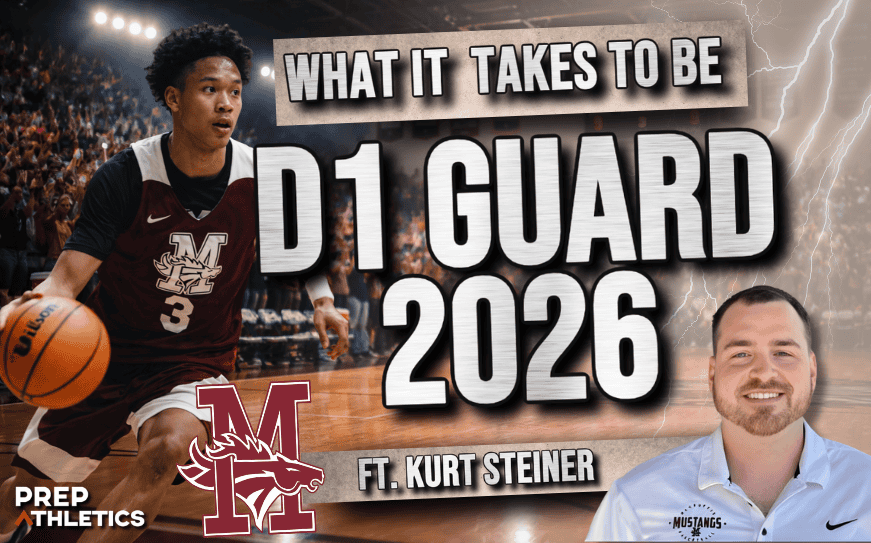
Prep school basketball guard handling the ball in a packed gym with text explaining what it takes to become a Division I guard in 2026.

What It Takes to Be a D1 Guard in 2026

A D1 coach details the skills, habits, and mindset college staffs demand from point guards, from pick-and-roll IQ to defense, film study, and leadership.

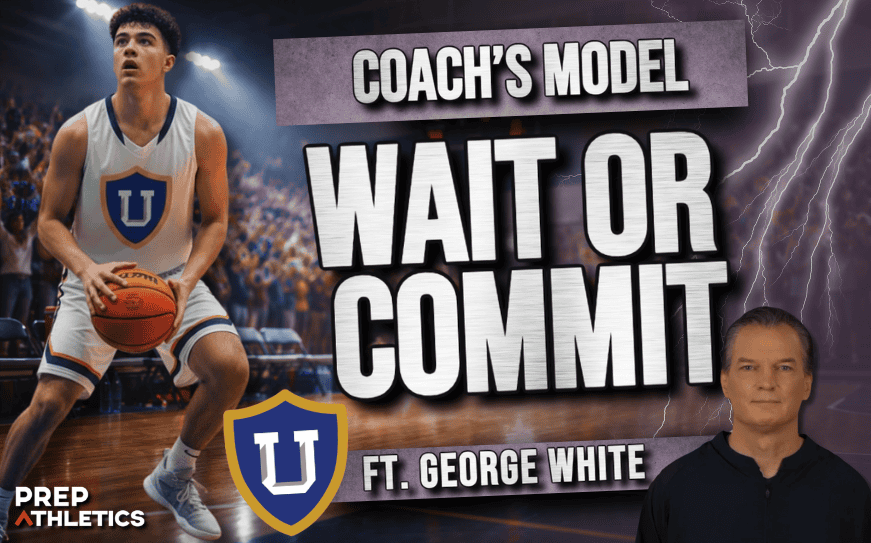
Prep school basketball player in game action with bold text reading “Coach’s Model: Wait or Commit,” highlighting a recruiting decision framework.

Post-Grads: Commit or Wait? A Coach’s Model

Former D1, NBA, and Ivy League coach breaks down modern recruiting, NIL realities, early commitments, best-fit schools, and smart paths families miss.

High school basketball player shooting in game action with bold text reading “High School Recruiting: Post-Grad vs JUCO,” highlighting a recruiting pathway comparison.

Post-Grad vs JUCO vs High School Recruiting

Compare post-grad prep, JUCO, and high school through a coach’s lens, and learn how age, habits, and readiness shape recruiting speed in the portal era.

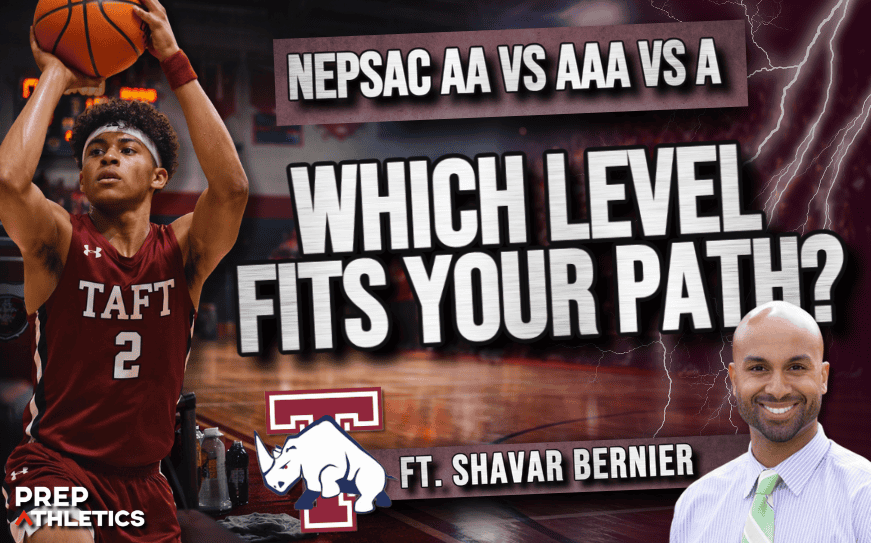
High school basketball player in game action with bold text reading “NEPSAC AA vs AAA vs A: Which Level Fits Your Path?” highlighting prep school league differences.

NEPSAC AA vs AAA vs A: Which Level Fits Your Path?

Understand the real differences between NEPSAC A, AA, and AAA, how playing time and competition impact development, and which level fits your recruiting path.

High school basketball player in game action with bold text highlighting “Post-Grad Year Full Student,” representing academic and athletic expectations in prep school programs.

Prep School Post-Grad Year Requirements and Academics: What Families Must Know

Learn how prep schools treat post-grads as full-time students, how academic placement works, and why coursework still matters during a post-grad hoops year.

Prep school basketball player in game action with message emphasizing that development wins over star rankings in the prep school process.

Basketball Rankings vs Reality: Why Development Wins Over Stars

Learn how basketball rankings are created, why chasing them backfires, and where players should invest their energy to actually get discovered and recruited.

Prep school basketball player shooting during a game with text highlighting what to say and ask in prep school interviews.

Prep School Interviews

Insider guidance on prep school admissions, from interviews and campus visits to fit, financial aid, and common mistakes families make behind the scenes.

FIND YOUR FIT

Find Your Fit

Get Your Free Personalized Prep School Assessment

Finding the right prep school basketball opportunity starts with understanding your complete situation. Our free assessment collects key information about your athletic abilities, academic standing, and financial considerations to provide targeted guidance specific to your circumstances. This approach allows us to cut through the recruitment noise and give you honest, practical feedback about your options. Most families find that this comprehensive evaluation saves them time and helps avoid mismatched programs that waste valuable development years.

Get Your Free Personalized Prep School Assessment

Finding the right prep school basketball opportunity starts with understanding your complete situation. Our free assessment collects key information about your athletic abilities, academic standing, and financial considerations to provide targeted guidance specific to your circumstances. This approach allows us to cut through the recruitment noise and give you honest, practical feedback about your options. Most families find that this comprehensive evaluation saves them time and helps avoid mismatched programs that waste valuable development years.

QUESTIONS?

Questions?

Fill out the form below, and we’ll get back to you within 24-48 hours, or feel free to reach out via email to cory@prepathletics.com. We look forward to hearing from you!

Fill out the form below, and we’ll get back to you within 24-48 hours, or feel free to reach out via email to cory@prepathletics.com. We look forward to hearing from you!