Every few years, a new school or basketball program enters the prep basketball landscape and gets people talking.
Some are built around a name. Some are built around facilities. Some are built around a schedule. Some are built around the promise of exposure.
But every once in a while, something comes along that is worth looking at a little more closely because the idea behind it is bigger than just adding another team to the map.
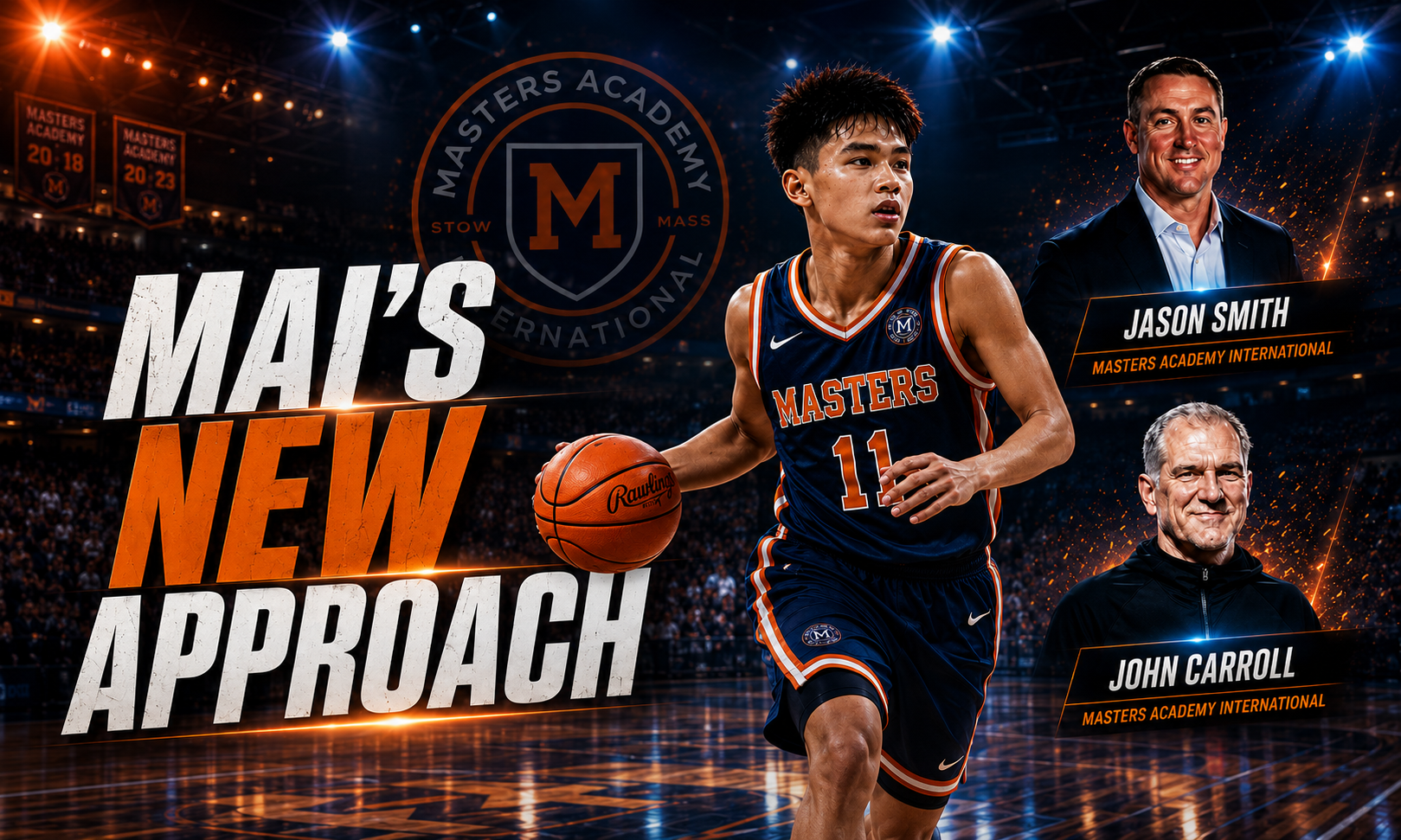
That is how I look at Masters Academy International, better known as MAI.
On a recent episode of the PREP Athletics Podcast, I had a chance to talk with John Carroll and Jason Smith about what they are building at MAI. Both of them have been around high-level prep basketball for a long time. They have coached, placed players, worked with families, and seen the prep landscape from the inside.
So when people like that leave established situations to help build something new, I think families should pay attention.
Not because every player should go there. That is never how I look at prep school. The right school is always about fit.
But MAI is one of the more interesting new programs in the prep basketball world because it is not trying to be a traditional boarding school with a little more basketball added on. It is trying to build a full academy model around the modern student-athlete.
That is the story here.
Why MAI Is Different
One of the first things John talked about was why this opportunity made sense.
He described himself as market driven. Over the years, he saw what players and families were asking for. They wanted more basketball. They wanted more access to development. They wanted a model that gave them room to chase the sport at a serious level.
But they did not want to sacrifice academics or character to do it.
That part matters.
There are plenty of places where a player can get more basketball. That is not hard to find. The harder thing is finding an environment where the basketball piece, the academic piece, the residential life piece, and the long-term college preparation piece are all connected.
John said, “They wanted more basketball. They wanted to not sacrifice academics to do it. And they wanted to not sacrifice character to do it.”
That is really the foundation of the MAI pitch.
This is not just about more gym time. It is about building the school day, the staffing, the academic structure, the recovery plan, and the basketball program around the needs of a serious student-athlete.
That is a different conversation than simply asking, “How good is the team?”
A Basketball Program Built Around Daily Development
Jason Smith made one of the clearest points in the conversation when he talked about what separates MAI from a more traditional prep model.
For him, it starts with access.
“The sheer amount of time that we are able to work with the players,” he said, is one of the biggest differences.
At many traditional boarding schools, coaches have limits on when and how often they can work with players, especially outside the season. Jason pointed out that players are often told they are made in the offseason, but many school models limit what coaches can actually do with players during that time.
MAI is designed differently.
Jason talked about being able to train players from the day they arrive on campus in September. He talked about being able to work with them daily. He talked about building a staff that can evaluate where a player is and then help develop that player from there.
That is important for families to understand.
Player development is not just a slogan. It is not just having a trainer come in once in a while. It is not just running good practices once the season starts. Real development requires time, consistency, evaluation, instruction, and daily access.
That does not mean every player needs the same environment. Some players thrive in a traditional boarding school model. Some need a different balance. Some are not ready for the daily demands of an academy model.
But for the right player, the structure MAI is building gives the basketball staff more room to work.
The Schedule Is Part of the Model
One of the most interesting parts of the conversation was the daily schedule.
A lot of families ask about games, leagues, and college coaches. Those are important, but I always tell families to ask a very basic question:
What does a normal day actually look like?
John explained that MAI is flipping the usual rhythm.
At many schools, athletics have to be wrapped around the academic day. That can lead to very early workouts, scattered training windows, and less recovery. At MAI, the sport block is built into the morning.
John said, “We’re wrapping our academics around athletics.”
That line might catch some parents off guard at first, but it is important to understand what he meant. He was not saying academics do not matter. He was saying the full day is being designed intentionally for high-level student-athletes.
A typical day, as John described it, would include sport from 8 to 12. That block can include strength work, individual instruction, team work, recovery, and the other pieces that go into athletic development. After that, players have lunch, then classes in the afternoon. In the evening, there is dinner, downtime, and optional access to the gym for players who want more work.
One of the benefits John pointed out is that players do not need to be dragged out of bed for a 6 AM workout just because the school day starts early.
“Our kids can get a full eight hours of sleep and they can recover,” he said.
That matters.
If you are serious about development, sleep matters. Recovery matters. Nutrition matters. The flow of the day matters. A schedule can either support development or fight against it.
MAI is trying to make the schedule part of the development plan.
More Basketball, But Not Just More Basketball
Whenever a program talks about more training and more access, the natural question is overuse.
Are kids doing too much? Are they playing too much? Are they training without enough rest?
John addressed that directly. He said the issue is not simply more basketball. The issue is more basketball without the proper recovery, prehab, nutrition, and load management built around it.
He made a great distinction.
“We don’t call it four hours of basketball a day,” he said. “We call it four hours of sport.”
That is a smart way to frame it.
The morning block is not supposed to be four straight hours of running up and down the floor. It includes the broader pieces of performance. Recovery. Nutrition. Prehab. Load management. Awareness of what the body needs.
That is the type of detail families should ask every serious program about.
It is easy for a school to say, “We train more.” The better question is, “How do you manage the physical load of training more?”
If a player is going to be in a high-level academy model, the sports performance side cannot be an afterthought. It has to be part of the program’s identity.
Academics Are Still Central
One of the biggest misconceptions about academy-style programs is that they are only about sports.
That is why I appreciated how clearly John talked about academics.
“I’m not coming to Masters because we’re dropping academics,” he said. “It’s an elevated experience academically.”
That is a strong statement, and it is important.
John talked about a model where the academic program can be tailored to the student. He mentioned high-level math options, including multivariable calculus, linear algebra, and number theory. He talked about older students having a college-style schedule with three classes in the fall and three in the spring. He also talked about giving students some exposure to online coursework because that is a reality many of them will see in college.
The larger point is that MAI is not presenting academics as something separate from the athletic mission. It is trying to build an academic structure that fits the life of a serious student-athlete.
John also made another point that I think is worth noting.
At MAI, the goal is for basketball coaches to coach basketball, teachers to teach, and residential life staff to focus on residential life.
That sounds simple, but it is not always how boarding schools operate. In many places, one person may be wearing several hats. Sometimes that works. Sometimes it does not.
John’s point was that specialization allows each area to go deeper. The athlete gets a basketball coach focused on basketball, a teacher focused on teaching, and residential support from people focused on that part of the experience.
For families, that is a helpful thing to ask about.
Who is teaching my child? Who is coaching my child? Who is supporting my child outside the classroom and gym? How connected are those people?
The answers matter.
Built in the Middle of a Prep Basketball Hotbed
MAI is not being built in a basketball vacuum. It is being built in New England, which has long been one of the strongest prep and post-grad basketball regions in the country.
Jason was clear about that.
He said New England has been “the home of postgraduate and prep basketball” for decades.
That is one reason the location makes sense.
MAI does not need to manufacture competition out of thin air. The region already has it. Jason talked about having 20 plus teams in the area that can provide high-level competition. He also pointed out that MAI does not have to get on a plane constantly to find real games.
That is a major advantage.
In prep basketball, geography matters. Access matters. The ability for college coaches to see multiple programs in a region matters. The ability to play strong competition without always traveling long distances matters.
MAI is entering a crowded and competitive region, but that is also part of what makes it interesting. They are not trying to avoid the prep basketball ecosystem. They are stepping right into one of the best ones.
College Placement Has to Be Intentional
Families ask me about college placement all the time. They should.
But placement is not just about saying a school has college connections. It is about having a clear plan for how players will be evaluated, developed, and placed at the right level.
Jason talked about the fall period being huge in prep school athletics. At MAI, the plan is to work out in the morning while many other schools are in class. That gives college coaches a clean window to come in and evaluate.
He explained that a college coach would know MAI is working out in the morning, instead of having to leave one workout halfway through to make another one.
That is a small detail, but it shows intentional thinking.
College coaches are busy. Their time matters. The easier you make it for them to evaluate your players in a serious environment, the better chance your players have to be seen properly.
This is also where the schedule connects back to placement. The daily structure is not just about training. It can also affect exposure.
Again, that does not mean MAI is the right fit for every player. But it does show that they are thinking about the entire pathway.
The Right Player for MAI
Jason was asked what kind of player fits MAI, and he did not give a vague answer.
He said the ideal player is “somebody that’s a gym rep, somebody that’s driven, somebody that’s motivated to play at the highest level and beyond.”
That is an important point for families.
A program like MAI is not going to be right for every player simply because the facilities are good or the schedule is attractive. The player has to want the daily work. The player has to be motivated. The player has to have high goals. The player has to care about more than just basketball, because Jason also talked about wanting high-character players with academic goals and ambitions.
This is where fit becomes everything.
Some players love the idea of an academy model until they realize what the daily expectations actually are. Some families love the idea of more basketball, but the player may not be ready for that level of structure. Others are exactly the type of player who will benefit from being surrounded by serious athletes, serious coaches, and a schedule built for development.
That is why families need to be honest with themselves.
Is the player driven enough?
Does he love being in the gym?
Does he want to be coached daily?
Does he care about academics?
Can he handle being in an environment where many of his peers have serious goals too?
Those are the questions that matter.
Transformational, Not Transactional
One of the best lines of the entire conversation came from John.
He said, “I took this job because I want it to be transformational, not transactional.”
That is exactly the type of thing families should listen for.
The prep school world has changed a lot. There are more teams, more events, more programs, and more promises than ever. But more is not always better.
John talked about not wanting MAI to become a 20-team operation. He said if the program grows to four teams, including middle school, that could be appropriate. But he was clear that he does not want it to become a place with five, six, seven, eight, nine, or ten teams where the experience starts to lose its purpose.
That matters.
A school can have great branding and still not be the right developmental environment. A program can have a lot of teams and still leave individual players without enough attention. Families have to look beyond the surface.
The question is not just, “Can my child make the team?”
The better question is, “Will this environment actually transform him?”
That is the bar John is putting out there for MAI.
A Big Vision for the Future
Jason and John were also very clear that the expectations are high.
Jason talked about wanting MAI to become a perennial top-five program in the country, compete for national championships, and do it right away.
John talked about reshaping what college preparation means. He mentioned the possibility of future NBA draft picks, high-level college placement, professional pathways, and strong academic placement as well.
Those are ambitious goals.
But what makes MAI interesting is not just the ambition. A lot of programs have ambition.
What makes it interesting is the model behind the ambition.
There is a large campus. There is serious financial backing. There is support from a major education organization. There are experienced coaches and school leaders. There is a schedule designed around development. There is a location in one of the best prep basketball regions in the country. There is an effort to connect basketball, academics, recovery, residential life, and college preparation.
That is why MAI is worth watching.
What Families Should Take From This
The point of this article is not that every serious basketball player should go to MAI.
That is never the right way to look at prep school.
The point is that MAI is giving families a clear example of how the prep basketball model is continuing to evolve.
For some players, a traditional boarding school will still be the best fit. For others, a post-grad year may make sense. For others, an academy-style model may be the right environment. The key is understanding what each school is actually built to do.
MAI is being built around a specific idea: serious basketball development, strong academics, recovery, college placement, and the full student-athlete experience should not be treated as separate pieces. They should be connected.
That is what makes the school interesting.
When I talk to families at PREP Athletics, I always come back to fit. The best school is not always the biggest name, the newest facility, or the flashiest program. The best school is the one that matches the student’s goals, personality, academic needs, athletic level, and long-term path.
MAI is going to be a school that a lot of basketball families ask about.
And based on what John Carroll and Jason Smith shared, there is a clear reason why.
They are not just trying to build another basketball program.
They are trying to build a new model.
To learn more about what Masters Academy International is building, visit the MAI homepage or explore the MAI basketball program. You can also listen to the full PREP Athletics Podcast episode with Jason Smith and John Carroll here: How MAI Is Redefining Basketball Development.