
Prep School Basketball Paths: Understanding Your Options
The prep landscape is more crowded than ever. Families now face a tough choice: a traditional prep school that balances academics and athletics—or a basketball academy built solely around competition and exposure.
We explored this with Coach Cade Lemcke, head coach at Blue Ridge School, who has guided dozens of players through both systems and seen firsthand how each path shapes long-term development.
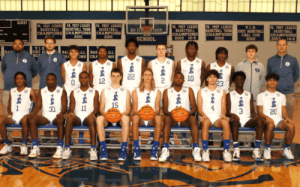
The Blue Ridge School basketball team continues a proud tradition of excellence, representing one of Virginia’s most competitive prep programs.
Academic Structure: Where Prep Schools Still Lead
Cory: Cade, let’s start with academics. How do prep schools differ from basketball academies?
Cade: “Prep schools are schools first. Kids are taking a full academic load with teachers who know them, advisors who track their grades, and dorm staff who hold them accountable. They’re learning how to manage life, not just hoops.”
Cade: “Basketball academies can do great things for skill development, but the academics are usually outsourced or online. That structure doesn’t work for every kid, especially those who need daily discipline.”
Competition and Exposure Differences
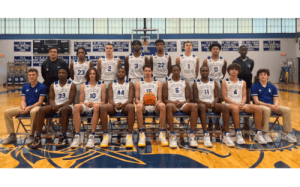
The Blue Ridge School basketball team represents one of Virginia’s top prep programs, combining structure, skill development, and academic excellence.
Cory: Parents sometimes assume academies play tougher schedules. Is that true?
Cade: “Not always. A good prep school schedule in the NEPSAC, MAPL, or VISAA can be just as competitive. Our Blue Ridge team faces nationally ranked opponents every year. College coaches know the difference between real programs and hype.”
Cade: “The exposure comes from doing things the right way—playing in events where coaches trust the competition level. The name on your jersey matters less than the structure around you.”
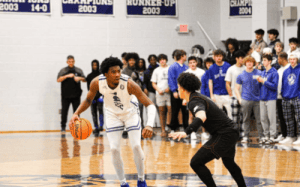
Blue Ridge School’s fast-paced prep basketball program in action, showcasing skill, discipline, and the energy of high-level prep competition.
Cultural Fit and Player Maturity
Cory: Beyond basketball, what makes the biggest difference in a player’s experience?
Cade: “Community. At prep schools, kids learn responsibility. They’re away from home but still in a monitored environment. They eat with classmates, do homework in study hall, and represent the school daily.”
Cade: “At academies, it’s more individualized. That can be great for an older player who’s laser-focused on basketball, but younger kids often need the balance and mentorship that come with a boarding-school setup.”
Long-Term Development and Recruiting Outcomes
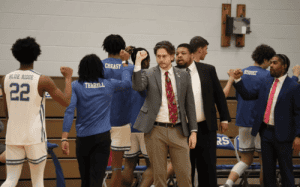
The Blue Ridge School basketball coaching staff leads by example—building unity, discipline, and college-level accountability within their program.
Cory: When you look at your alumni, what trends do you notice?
Cade: “Our prep-school graduates are ready for college life. They’ve managed classes, weight training, team travel, and accountability. Coaches at the next level don’t have to babysit them.”
Cade: “Academy kids might be physically talented, but sometimes they struggle with independence or academics once they get to college. It really depends on what kind of structure they had beforehand.”
Cory’s Takeaway — Structure Creates Success
There’s no one-size-fits-all path—but there is a right fit.
Prep schools provide the academics, structure, and daily accountability most athletes need to thrive in college. Academies can work for the rare player ready to treat basketball like a full-time job.
At PREP Athletics, we help families find that balance—where education, culture, and opportunity meet.
If you’re looking into prep school, reach out to us at PREP Athletics. We’re here to help you explore your potential and make choices that align with your athletic and academic future. We’ve also got a long list of resources to get you started in the right direction, so check out our latest prep basketball updates on YouTube or our podcast to dive deeper.