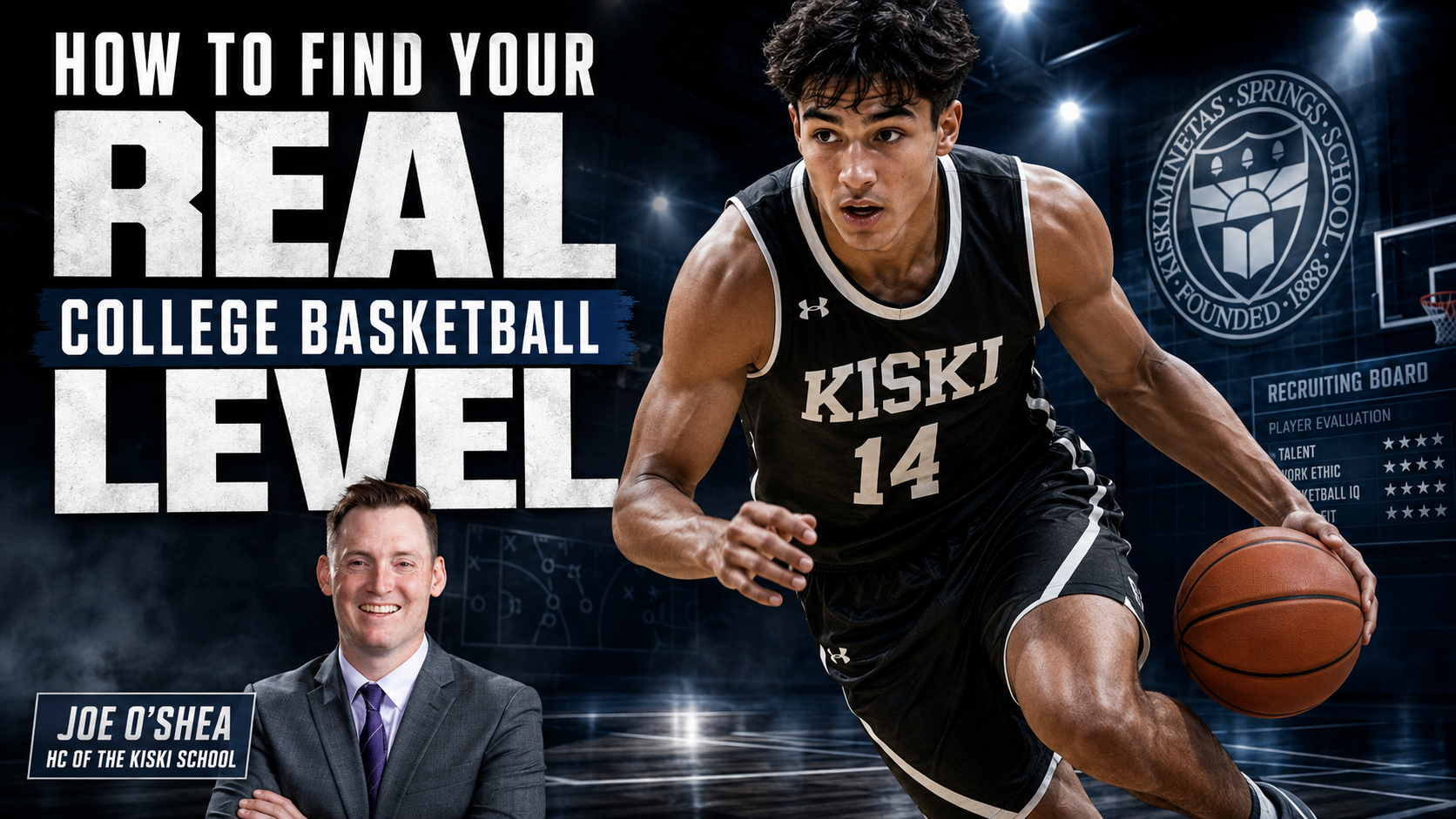
How to Find Your Real College Basketball Level

Many players judge their college basketball level by the highest-level roster they might be able to make.

That sounds reasonable. It can also lead families toward the wrong question.

A coach may believe you are talented enough to occupy a roster spot without believing you are ready to play meaningful minutes, fill a needed role, or help the team win. Those are different standards, and the difference can shape where you truly fit.

That was one of the most important points Joe O’Shea made during our conversation. Joe is the head coach at The Kiski School and spent eight years playing and coaching in college basketball before moving into the prep-school game.

He put the distinction plainly:

“There’s a difference between being able to be on a roster at a level and there’s a difference between being able to help a coach win at a level.”

For players trying to find their real college basketball level, that is a much more useful starting point than asking, “What is the highest division I can reach?”

Your College Basketball Level Is About Contribution, Not Just Admission

Being capable of making a team answers one question: Can you get onto this roster?

Being capable of helping that team win requires a deeper evaluation. A coach must be able to picture how your game contributes at that program’s level.

Joe’s perspective comes from seeing several parts of the college basketball landscape. He played at the Division I level, coached in Division II, watched high-level Division III basketball closely, and now helps players navigate college placement at Kiski.

He described the differences between mid-major Division I, low-major Division I, multiple levels of Division II, and high-level Division III as subtle but meaningful.

That matters because the divisions are not three simple categories in which every team at one level looks the same. Evaluating a player requires a more precise comparison between that player and the specific programs recruiting him.

A player may be close enough to a level to appear on a roster. The more important question is whether his current game gives a coach a reason to use him.

Why Scholarship Programs Evaluate Immediate Value

Joe drew a distinction between scholarship programs and Division III programs.

At the scholarship level, he believes players must be able to help relatively quickly.

“Especially at the scholarship level, if you can’t help a coach win at that level in today’s climate, you’re not really going to be at that school for very long.”

That is not a reason for players to panic or automatically aim lower. It is a reason to evaluate opportunities honestly.

A Division I or Division II roster spot can sound like the better outcome because of the label attached to it. But the label alone does not explain what the coach expects from you, where you stand in the program, or whether the staff believes your game can help them win.

The real value of an opportunity depends on more than being accepted onto the team. It depends on how the coach sees you fitting into what the program is trying to accomplish.

Coaches Want Players Who Can Raise Their Program’s Level

The evaluation does not become casual at Division III.

Joe explained that Division III is different because scholarships do not operate in the same way. Still, the coach is trying to improve the team.

“Coaches are always looking for a player that’s a little bit above their level. That’s really how they win.”

That sentence helps explain recruiting from the coach’s side.

A coach is not simply trying to collect players who can survive at the program’s current level. The coach is looking for players who can make the team better.

That is why “I can play at that level” may not be enough. The coach is asking a more demanding question: Does this player give us something that improves our ability to win?

It also explains why two programs within the same division may evaluate the same recruit differently. Each coach is judging the player in relation to that particular team and level.

Should You Choose Division II Over Division I?

There is no automatic answer based on the division name alone.

Joe’s point is not that players should always choose the lower level. His job at Kiski is still to advocate for players and help them reach the best possible situation. But that advocacy has to be paired with an honest understanding of where the player can contribute.

A Division I opportunity may be the right fit when the program genuinely believes the player can help. A Division II or Division III opportunity may be stronger when the coach sees a clearer role and a better match between the player’s game and the team’s needs.

The decision should not be reduced to which logo or division carries the most prestige.

Players considering an additional year before college may also benefit from understanding how a post-grad year can help reveal the appropriate college basketball level. More time can create another evaluation period, but the final question remains the same: At which level can this player realistically contribute?

Honest Evaluation Has to Come Before Placement

Later in our conversation, Joe explained how he approaches college placement with his players.

He listens to their goals and respects where they want to play. At the same time, he believes he has to tell them what he sees.

“I’m happy to do that, but I also have to be realistic with you about where I think you can play.”

That honesty serves both the player and the coach receiving the recommendation.

Joe noted that college coaches ultimately decide whether they believe a recruit can play for their school and at their level. His role is to get the player in front of those coaches, advocate for him, and provide a realistic evaluation.

As he sees it, repeatedly recommending players at the wrong level would damage his credibility. Sending players to an appropriate level where they can be successful strengthens it.

The same principle applies to families making recruiting decisions. Wanting a certain level is understandable. But the placement process works better when the goal is tested against honest feedback rather than protected from it.

Questions Players Should Ask About Their Real Level

A player does not need to abandon ambition. He does need to understand what an opportunity actually represents.

Based on Joe’s distinction, these are more useful questions to ask:

  • Does this coach see me as someone who can help the team win?
  • What does the staff believe my role could become?
  • Is the evaluation based on comparison with players across several college levels?
  • Am I hearing realistic feedback, or only the answer I want to hear?
  • Is this the best overall situation for me, or simply the highest division available?

These questions cannot guarantee how a college career will unfold. Joe did not suggest that any coach can promise minutes or predict everything that will happen.

They can, however, help a family understand whether an offer reflects a possible place on the roster or a genuine belief in the player’s ability to contribute.

Find the Level Where Your Game Has Real Value

It is natural for players to want to compete at the highest level possible. Joe’s approach does not dismiss that goal. It makes the evaluation more precise.

Your real college basketball level is not necessarily the highest roster you can enter. It is the level where a coach can realistically see your game helping the program win.

That distinction may lead a player toward Division I, Division II, or Division III. The important part is reaching that decision through an honest evaluation of fit and contribution—not through the division label alone.

PODCASTS

Austin Burnette: HC of Hargrave Basketball | Development Through Elite Basketball Competition

Hargrave Basketball coach Austin Burnette explains how elite competition, earned minutes, and deep rosters prepare players for college.

Joe O’Shea: Head Coach of The Kiski School on Reclassing, Recruiting & Development

Joe O’Shea of The Kiski School discusses reclassing, recruiting, player development, playing time, and preparing athletes for college basketball.

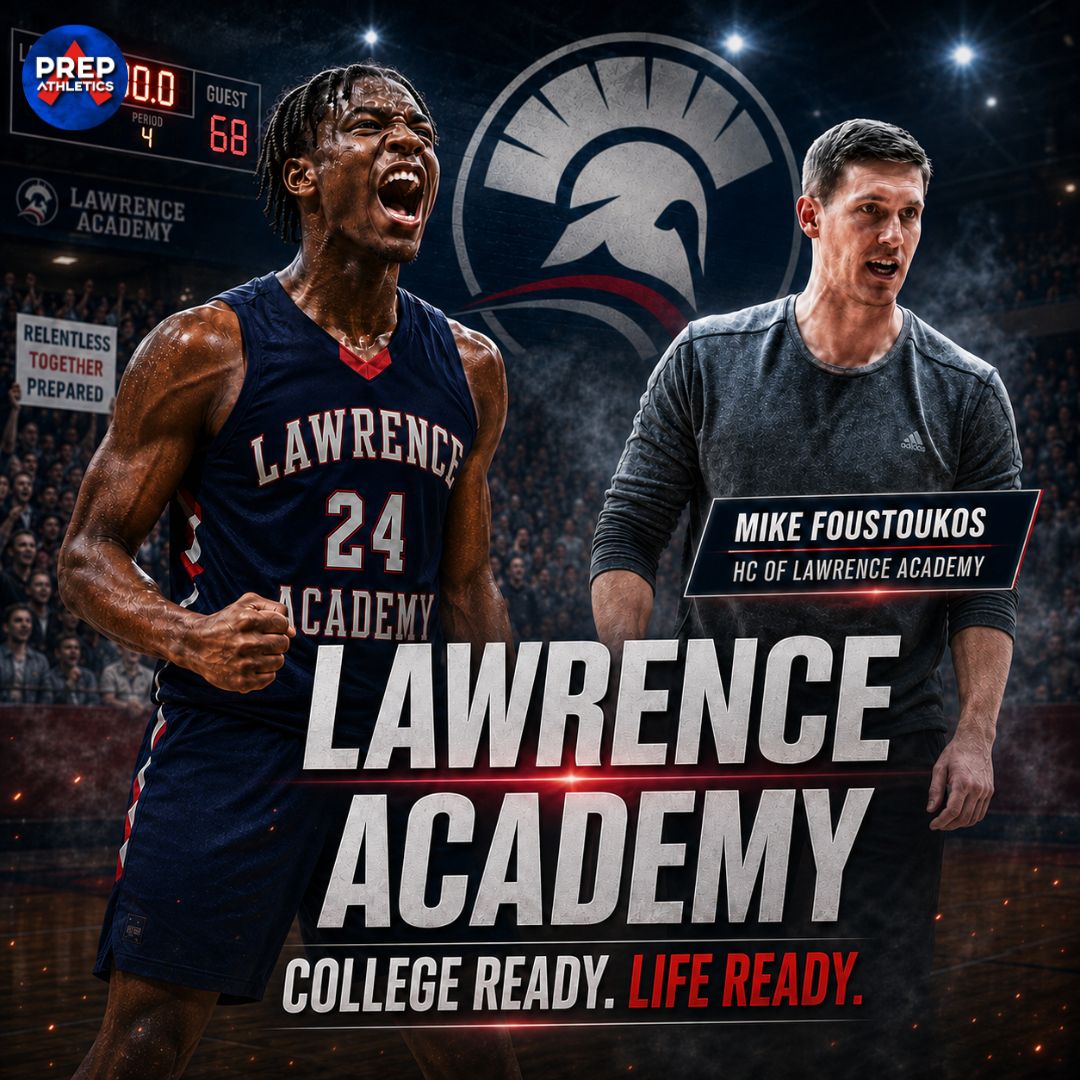
Mike Foustoukos: Lawrence Academy Basketball HC on Reclassing, D1 Guards & NCAA Changes

Lawrence Academy Basketball coach Mike Foustoukos discusses reclassing, D1 guard development, college fit, and NCAA eligibility changes.

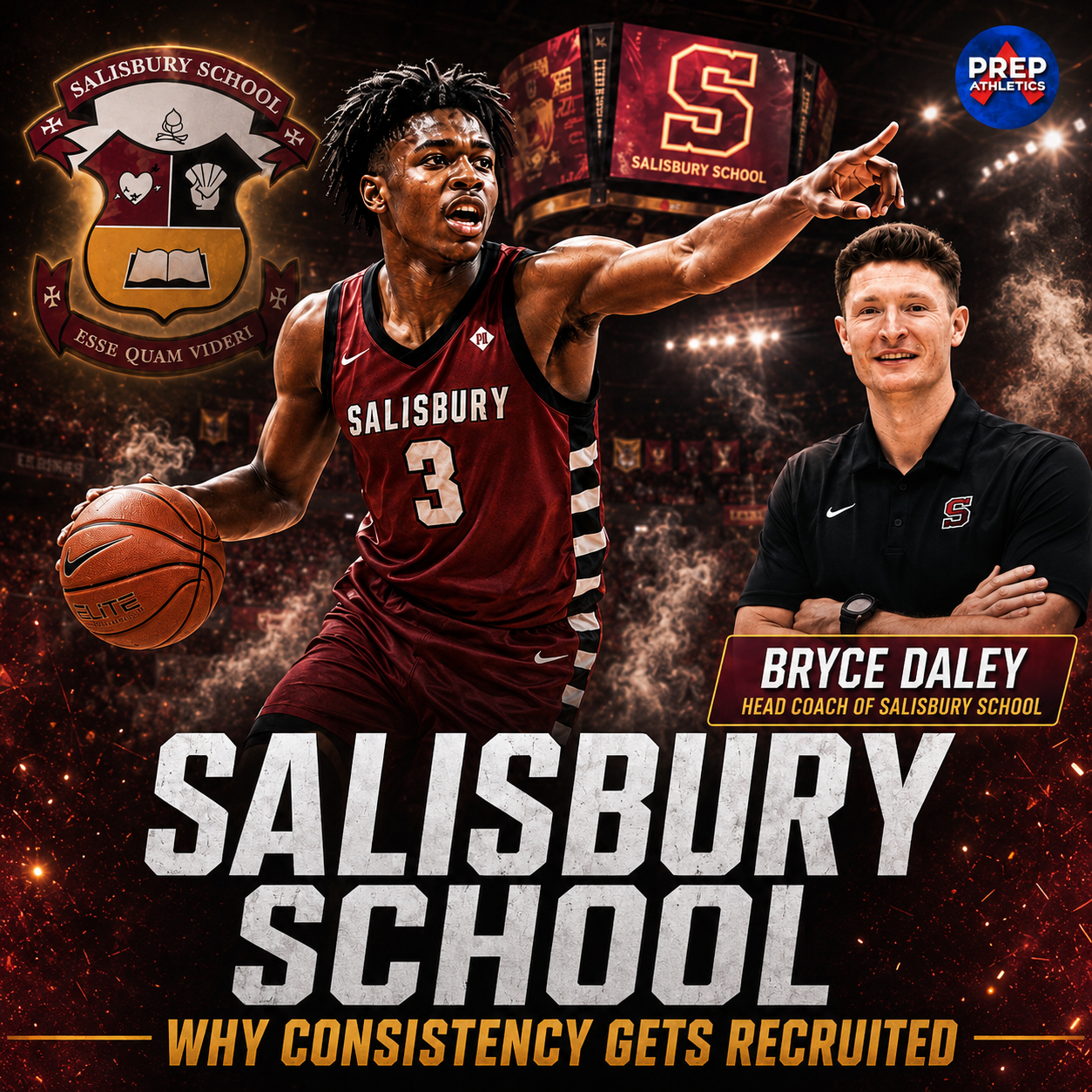
Bryce Daley: Coach of Salisbury on How to Get Recruited for Basketball and Post-Grad Years

Bryce Daley, coach at Salisbury School, shares how to get recruited for basketball, what families should know about a post grad year for basketball, and how prep school can help players prepare for college.

Bill Hanzlik: Former Nugget on What NBA Teams Look For & Choosing Prep School for His Son

https://youtu.be/Mwc-6r8lHv8 Audio Only Download Listen On Apple  Listen On Spotify Listen On Amazon ▶️ Show Notes What NBA teams look for goes beyond talent. Former Denver Nugget Bill Hanzlik joins PREP Athletics to talk about player potential, work ethic,...

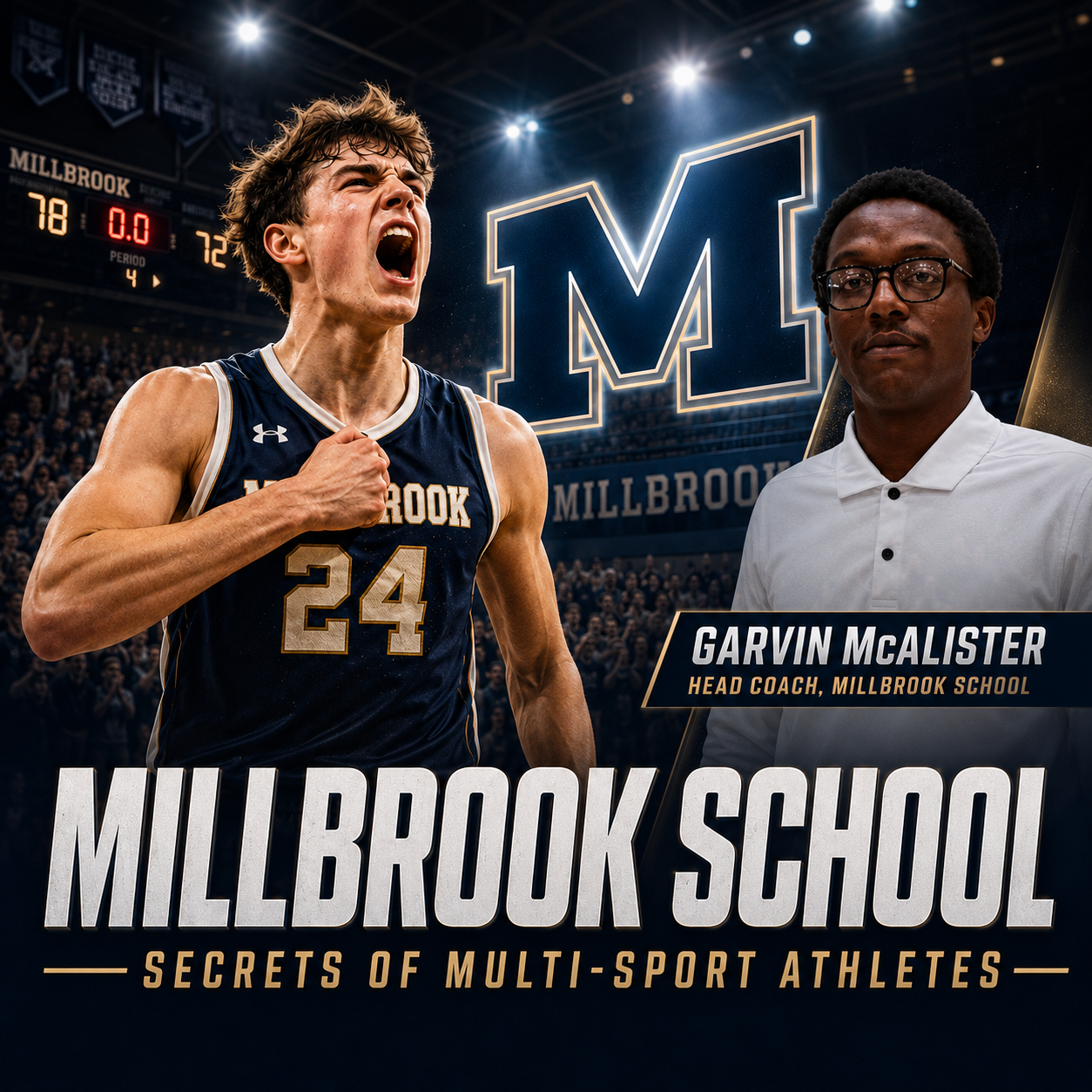
Garvin McAlister: Millbrook’s Head Coach on Playing Multiple Sports & Athlete Development

Garvin shares his insights on student-athlete development tips, multi-sport training, and preparing high school athletes for success both on and off the court.

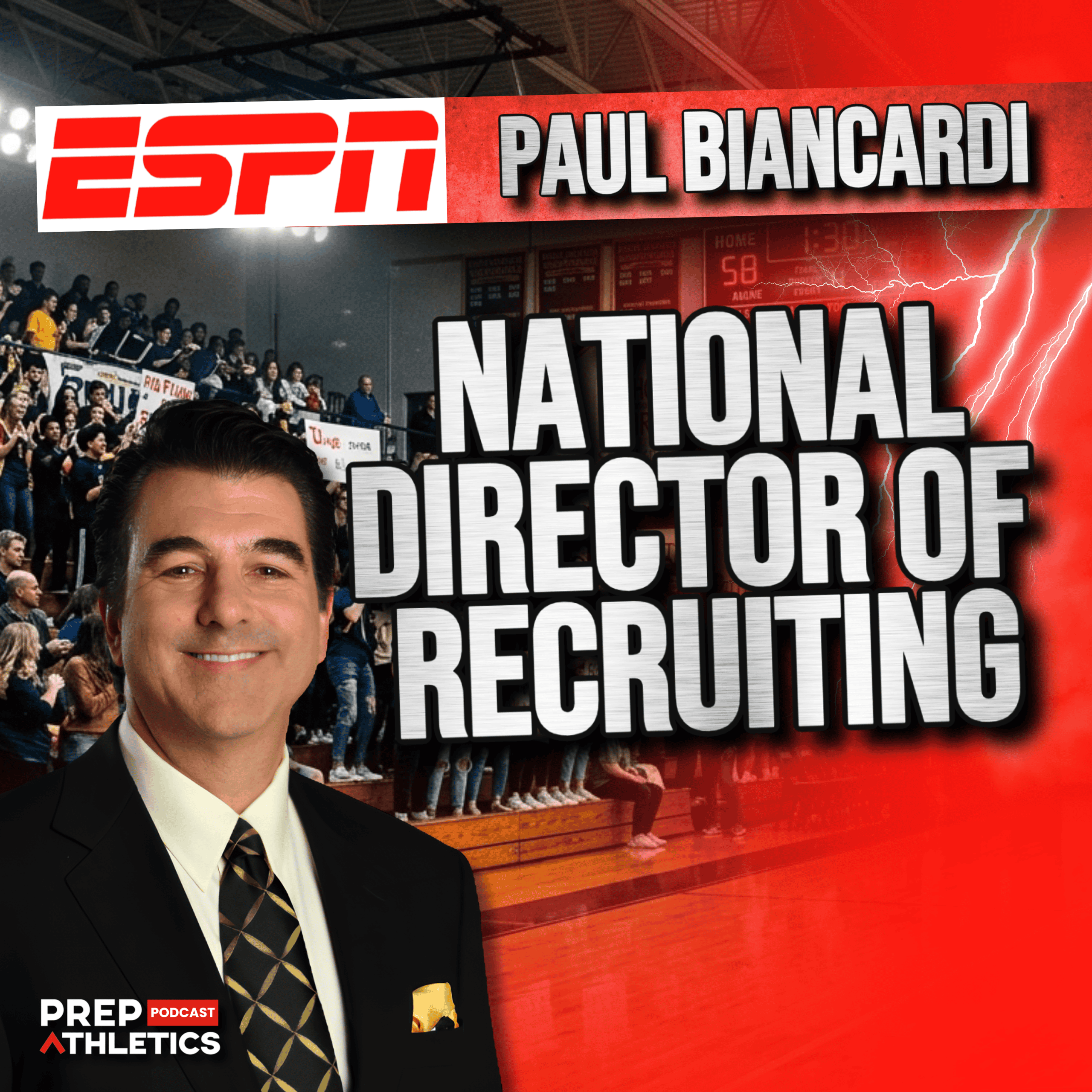
Paul Biancardi, ESPN National Director of Recruiting, featured on a PREP Athletics podcast thumbnail with a high school basketball gym background.

Paul Biancardi: ESPN Recruiting Director on What Coaches Really Want

ESPN’s Paul Biancardi joins the PREP Athletics Podcast to reveal what college coaches look for in recruits and how to stand out in the scouting process.

George White, founder of RecruitU and former D1 coach, discussing NCAA’s 5-and-5 rule on the PREP Athletics Podcast, with a basketball player in action and a crowd in the background.

George White: D1 Coach Breaks Down NCAA’s New Eligibility Rules

Former Harvard player & D1 coach George White breaks down the NCAA’s 5-and-5 rule and its impact on prep basketball.

Promotional thumbnail for Prep Athletics Podcast featuring John Carroll and Jason Smith with the Masters Academy International logo and a basketball gym background.

Jason Smith & John Carroll: How MAI is Redefining Basketball Development

Jason Smith & John Carroll reveal how MAI is revolutionizing prep basketball with elite training, academics, and college placement.

Avon Old Farms Head Coach Matt Mihalich and a player in action during a basketball game, featured on the PREP Athletics Podcast.

Matt Mihalich: Avon Old Farms Coach on Playing Time, Reclassifying, and College Placement

Get insider prep hoops tips from Avon Old Farms Coach Matt Mihalich on playing time, reclassifying & college placement—only on PREP Athletics.

ARTICLES

Inside MAI: A New Model for Prep Basketball

Inside MAI’s new prep basketball model, built around player development, academics, recovery, college placement, and the full student-athlete experience.

The NCAA’s New Rule: What Players and Parents Need to Know

Learn how the NCAA’s proposed 5-and-5 rule could impact recruiting, NIL, transfers, post-grad years, and college athlete eligibility.

What Prep Schools Really Look for in Basketball Recruits in 2026

Discover what prep school basketball coaches really look for in recruits in 2026. St. George’s coach Dwayne Pina shares insights on player development, Ivy League recruiting, AA prep basketball, the transfer portal, and what separates Division I athletes.

How Prep School Can Change a Player’s Recruiting Path

How one prep school year transformed Antonio Anderson’s recruiting path, and why the right environment can change everything for overlooked players.

Prep school basketball guard handling the ball in a packed gym with text explaining what it takes to become a Division I guard in 2026.

What It Takes to Be a D1 Guard in 2026

A D1 coach details the skills, habits, and mindset college staffs demand from point guards, from pick-and-roll IQ to defense, film study, and leadership.

Prep school basketball player in game action with bold text reading “Coach’s Model: Wait or Commit,” highlighting a recruiting decision framework.

Post-Grads: Commit or Wait? A Coach’s Model

Former D1, NBA, and Ivy League coach breaks down modern recruiting, NIL realities, early commitments, best-fit schools, and smart paths families miss.

High school basketball player shooting in game action with bold text reading “High School Recruiting: Post-Grad vs JUCO,” highlighting a recruiting pathway comparison.

Post-Grad vs JUCO vs High School Recruiting

Compare post-grad prep, JUCO, and high school through a coach’s lens, and learn how age, habits, and readiness shape recruiting speed in the portal era.

High school basketball player in game action with bold text reading “NEPSAC AA vs AAA vs A: Which Level Fits Your Path?” highlighting prep school league differences.

NEPSAC AA vs AAA vs A: Which Level Fits Your Path?

Understand the real differences between NEPSAC A, AA, and AAA, how playing time and competition impact development, and which level fits your recruiting path.

High school basketball player in game action with bold text highlighting “Post-Grad Year Full Student,” representing academic and athletic expectations in prep school programs.

Prep School Post-Grad Year Requirements and Academics: What Families Must Know

Learn how prep schools treat post-grads as full-time students, how academic placement works, and why coursework still matters during a post-grad hoops year.

Prep school basketball player in game action with message emphasizing that development wins over star rankings in the prep school process.

Basketball Rankings vs Reality: Why Development Wins Over Stars

Learn how basketball rankings are created, why chasing them backfires, and where players should invest their energy to actually get discovered and recruited.

FIND YOUR FIT

Find Your Fit

Get Your Free Personalized Prep School Assessment

Finding the right prep school basketball opportunity starts with understanding your complete situation. Our free assessment collects key information about your athletic abilities, academic standing, and financial considerations to provide targeted guidance specific to your circumstances. This approach allows us to cut through the recruitment noise and give you honest, practical feedback about your options. Most families find that this comprehensive evaluation saves them time and helps avoid mismatched programs that waste valuable development years.

Get Your Free Personalized Prep School Assessment

Finding the right prep school basketball opportunity starts with understanding your complete situation. Our free assessment collects key information about your athletic abilities, academic standing, and financial considerations to provide targeted guidance specific to your circumstances. This approach allows us to cut through the recruitment noise and give you honest, practical feedback about your options. Most families find that this comprehensive evaluation saves them time and helps avoid mismatched programs that waste valuable development years.

QUESTIONS?

Questions?

Fill out the form below, and we’ll get back to you within 24-48 hours, or feel free to reach out via email to cory@prepathletics.com. We look forward to hearing from you!

Fill out the form below, and we’ll get back to you within 24-48 hours, or feel free to reach out via email to cory@prepathletics.com. We look forward to hearing from you!