One thing players and parents do not always realize is that college coaches talk about recruits with each other. A coach can walk into a gym to evaluate one player, notice somebody else, and decide that second player is not right for his program—but still mention him to another coach who might be a better fit.
That part of recruiting came up in my full conversation with Coach Alex Popp, head coach of The Winchendon School. It was one of those parts of the conversation that I think is easy for families to overlook because so much attention gets placed on who is sitting in the gym specifically to see your son or daughter.
Recruiting does not always stay inside those clean lines.
Sometimes the coach who notices you is not the coach who eventually recruits you.
Why College Coaches Talk About Recruits
I asked Alex about something I have seen throughout basketball: coaches at different levels know each other, communicate and sometimes help each other find players.
His answer was pretty straightforward.
Alex explained that Division III assistants may be networking with Division II programs, while low-major and mid-major Division I coaches may have relationships with coaches at the high-major level. He also pointed to coaching trees—the web of coaches who have worked together, coached under one another or developed relationships throughout their careers.
Those relationships create opportunities for information to move.
A player might not fit the roster need of the school watching him. That does not necessarily mean the evaluation ends there.
From Alex’s perspective, coaches are often trying to help one another. Sometimes that relationship benefits a program’s own recruiting. Sometimes it is simply one coach helping another coach identify a player who might fit.
That distinction matters because players and parents naturally look at recruiting from the player’s point of view: Who is recruiting me?
Coaches can be looking at the gym more broadly.
A Coach Can Come to See One Player and Leave Talking About Another
The best example Alex gave was simple.
Imagine a college staff comes into a gym primarily to watch one prospect. While they are there, one of his teammates has an outstanding night. Maybe he dominates the glass. Maybe he shoots eight for 11 from three.
That player may not fit what the visiting school needs. But the coach still noticed him.
Alex described what can happen next:
“We could kind of make a couple phone calls for him. That stuff happens all the time.”
I think that is an important recruiting lesson.
The player did not suddenly become the visiting program’s top target. Alex specifically framed the example around a coach saying the player was not what that particular program needed.
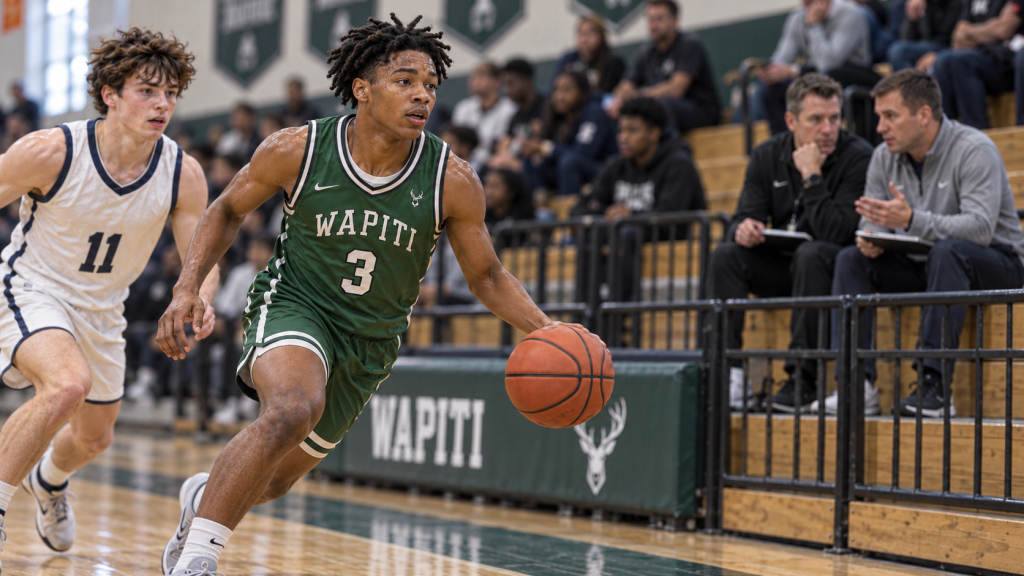
A coach may enter the gym focused on one prospect and leave with another player’s name worth sharing through his basketball network.
But somebody saw him play well.
And that coach may know another staff that should take a look.
For the player, that means the value of a strong performance is not always limited to the schools visibly recruiting him that day.
Recruiting Networks Can Cross Levels
Alex also talked about why those referrals happen.
Part of it is networking. College coaches have their own professional relationships and coaching trees. Coaches at one level may want relationships with staffs at another. People help one another, and sometimes those favors come back around.
As Alex put it, there is some “good basketball karma” involved.
He gave a similar example from the prep-school side. Other prep coaches had already contacted him because their admissions calendar was finished and they still had a player they were trying to help. They wanted to know whether Winchendon might still have room.
That is not exactly the same situation as a college coach referring a recruit, but the underlying relationship is similar: a player may no longer fit one program’s situation, while somebody in that coach’s network may have a need.
It is important not to turn that into something it is not.
A referral is not an offer. A phone call is not a scholarship. And Alex was clear elsewhere in our discussion that exposure platforms themselves do not guarantee recruiting results.
What they can create is another conversation.
Sometimes that is enough to keep the recruiting process moving.
Exposure Is Bigger Than Who Came to See You
This also changes how I think families should evaluate exposure.
Earlier in our conversation, Alex talked about the number of college coaches that can come through NEPSAC scholastic live weekends and prep-school gyms in the fall. His point was not that being seen automatically turns into an offer. In fact, he specifically said there are no guarantees from those platforms.
The opportunity is being in an environment where coaches are evaluating players.
And once you understand that coaches communicate with one another, there is another layer to that visibility.
The school printed on a coach’s shirt may not need you.
Another school he knows might.
That is why I would not judge every exposure opportunity solely by asking, Did one of the coaches in the gym offer me?
There can be value in simply giving connected basketball people a chance to evaluate you.
For families trying to understand the larger role environment and exposure can play, I have also broken down how prep school can change a player’s recruiting path.
The Connected Prep Coach Matters Too
There was another part of Alex’s interview that ties directly into this.
When I asked how a prep coach can most efficiently help players with college recruiting, Alex talked about having programs reaching out to you in the first place. A college staff might initially come into your gym because it wants one player and then begin learning about other players on the roster.
Alex’s description of what a strong prep-school coach should become was great:
“I think you want to be a lighthouse, Cory.”
What he meant was that the coach needs to be seen while also seeing what is happening throughout the basketball world.
He talked about getting to the right events, networking and getting face time with people. In his view, recruiting work uses every platform available and becomes a seven-days-a-week commitment.
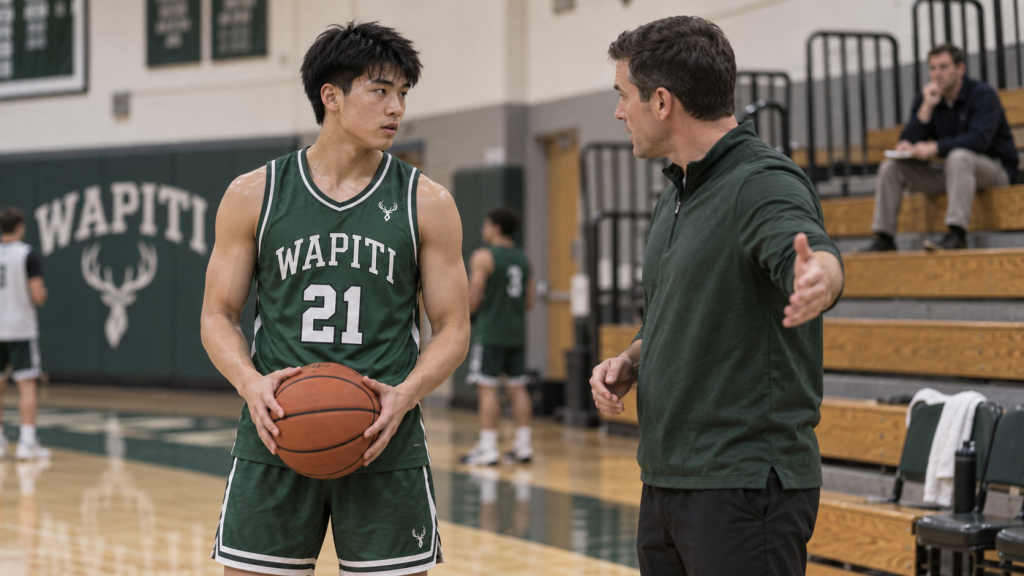
Strong prep-coach relationships can keep college staffs returning to the gym, creating additional opportunities for players on the roster to be evaluated.
That gives families another way to think about prep-school recruiting.
It is not only, How many coaches will be at our games?
It is also, How connected is the person helping our players navigate those conversations?
If a coach has strong relationships and college programs are already coming through the gym, one player’s recruitment can sometimes create visibility for teammates as well.
What Players and Families Should Take From This
Understanding that college coaches talk about recruits changes the way I think players and families should look at recruiting exposure.
For players, the biggest takeaway is to avoid deciding that a performance “doesn’t matter” because the schools watching are not obviously recruiting you.
Alex’s example was the opposite. The coach might be there for somebody else entirely. You can still give him something worth remembering.
For parents, it is a reminder that recruiting interest is not always visible in real time. The coach in the gym may not be the coach whose program eventually becomes relevant.
And when you are evaluating a prep program, it is worth understanding how the coach approaches relationships. Alex clearly views networking, face-to-face interaction and consistent communication as central parts of helping players get evaluated.
None of that guarantees an opportunity.
But it helps explain why being in the right environment can matter in ways that are difficult to see from the bleachers.
One Evaluation Can Travel Farther Than You Think
Recruiting can feel very direct from the player’s side: this coach likes me, that coach doesn’t, this school offered, that school didn’t.
Alex Popp’s point adds another layer.
A coach may evaluate you and decide you are not the right player for his roster. He can still believe you are a good player. And sometimes, he knows exactly who else should hear about you.
That is why a recruiting visit does not always affect only the player the coach originally came to see.
You never know where a good evaluation—and the relationship behind it—might lead next.