Do College Basketball Coaches Check Character and Reputation?

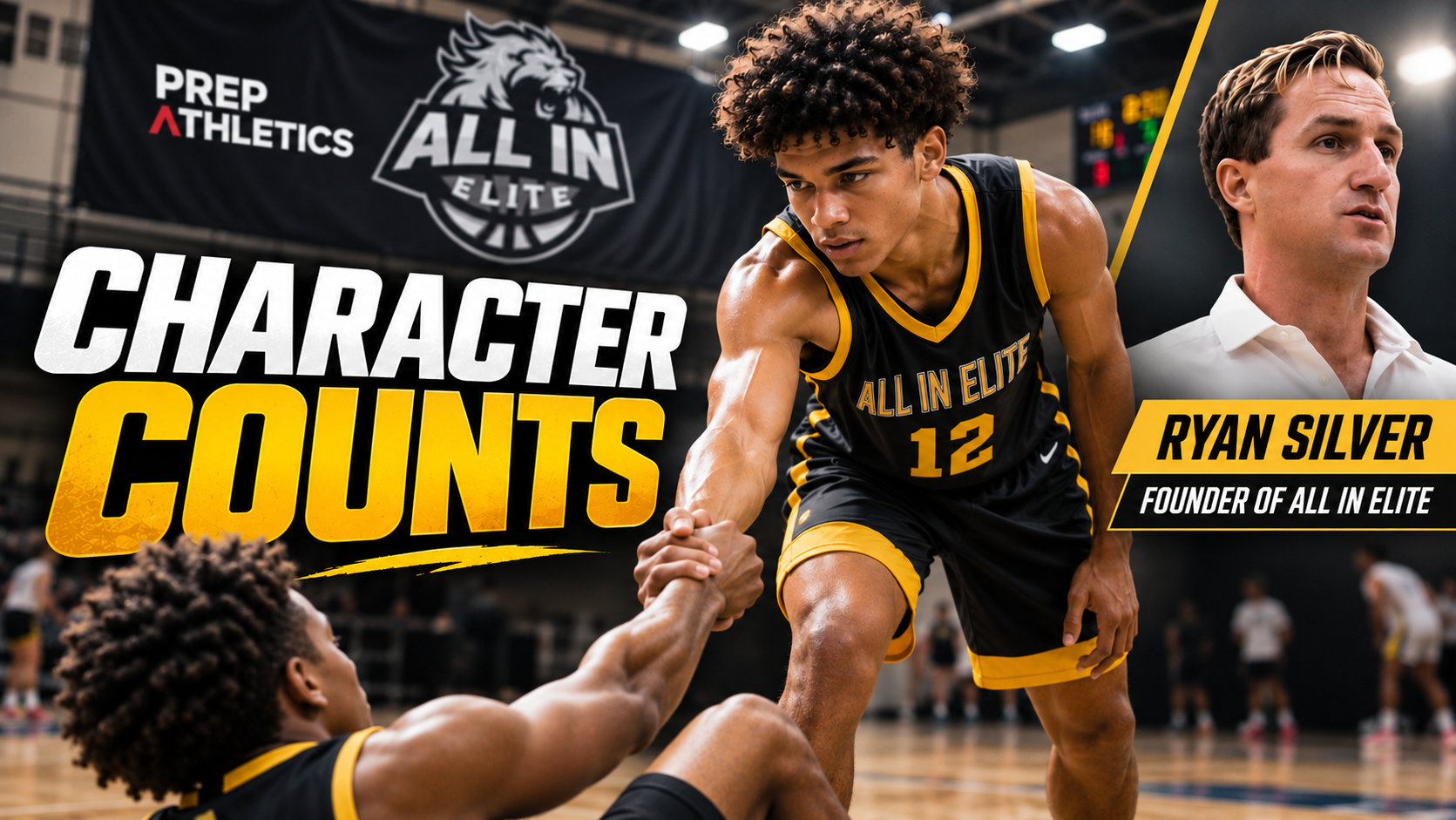
When I had Ryan Silver, founder of All In Elite Basketball, on the PREP Athletics Podcast, he shared an example of what can happen behind the scenes in college basketball recruiting.

“There’s a kid recently that decommitted from a school and I had head coaches at some of the top schools in the country calling me, just asking for character references.”

If you’ve ever wondered whether college basketball coaches check character when evaluating recruits, Ryan’s experience gives you a clear answer. What another coach can tell them about you goes well beyond what they see during a game.

What College Coaches Notice Beyond Basketball Skill

I asked Ryan what college coaches notice when watching a game that players and parents might overlook. His first answer was toughness. He also talked about players who don’t play hard and have bad attitudes.

Toughness isn’t just about being physical or playing through contact. It’s also about how you compete when things aren’t going your way.

Two players can have equally bad shooting nights. One gets frustrated, stops getting back on defense, and becomes disengaged. The other keeps defending, encourages his teammates, and looks for different ways to help his team win.

Neither player is shooting well, but they’re giving a college coach two very different things to evaluate.
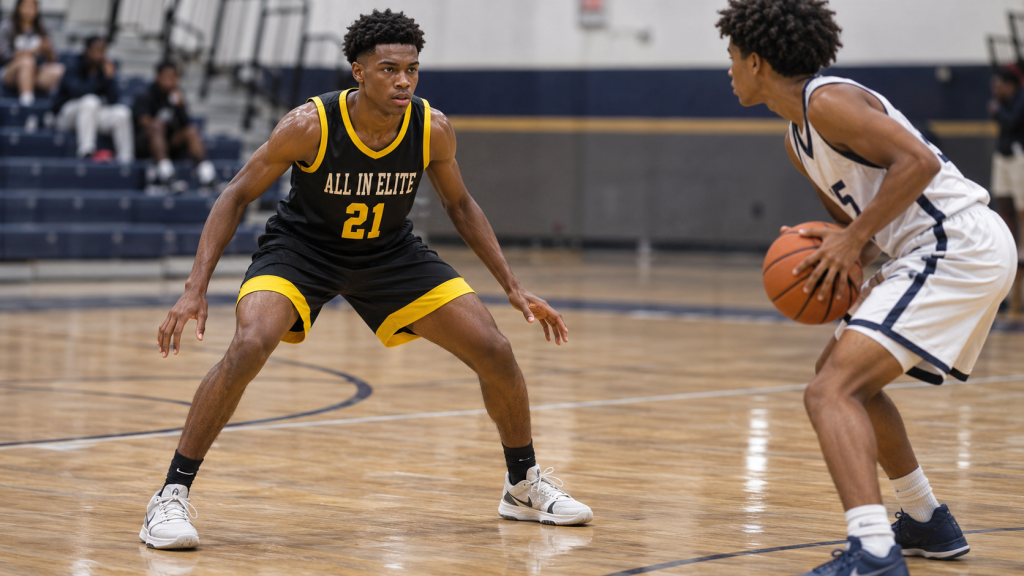
Fictional All In Elite shooting guard maintaining a focused defensive stance against an opposing ball handler.

Even when shots aren’t falling, defensive effort and emotional composure give college coaches something meaningful to evaluate. (Illustrative scene.)

Effort, emotional composure, and coachability are among the qualities basketball evaluators look for when assessing talent. These qualities help a coach assess how a player might handle the demands of college basketball, particularly when their role or playing time changes.

Ryan places as much importance on who a recruit is as a person as he does on who they are as a basketball player.

How Do College Basketball Coaches Check Character?

“You know, your attitude will carry with you,” Ryan said.

A college coach might watch you play for an afternoon. Your high school, AAU, or prep school coach gets to see you over an entire season.

They see how you respond when your minutes get cut, how you handle criticism, how you practice after a tough loss, and how you treat teammates who aren’t as talented as you.

Those are things that don’t always come through on a highlight reel.

Basketball is a relationship-driven business. When college coaches talk about recruits, a character reference from someone who knows the player well can provide context that a scouting visit alone cannot.

A bad attitude can hurt your recruitment, even if you’re talented. If a coach is deciding between two players with similar abilities, concerns about one player’s reliability or willingness to be coached can become another factor in that decision.

A strong reputation, on the other hand, gives a coach another reason to feel confident about bringing you into their program.

Why Character and Leadership Matter Especially for Guards

When I asked Ryan what it takes to play Division I basketball as a guard, he emphasized toughness, feel for the game, and leadership. He also made his expectations about character clear:

“Everyone wants a high character point guard or guard on their team.”

As a point guard, you’re helping organize the offense, communicating with teammates, recognizing defensive adjustments, and making decisions under pressure.

When a teammate misses a defensive assignment, a guard can dwell on the mistake or help make sure everyone knows the adjustment before the next possession.

Leadership doesn’t require being the loudest person in the gym or the leading scorer. A quieter player who makes good decisions, communicates effectively, and remains composed under pressure can be an excellent leader.

For a guard, these qualities complement basketball skill. They help that player get more out of the other four people on the floor.

How Players Can Build the Reputation They Want

I also asked Ryan whether toughness can be taught.

“I think you can teach levels of toughness. I think you can teach structure and discipline.”

Ryan used his own life as an example. As he’s gotten older, he’s developed healthier habits and become more disciplined in his daily routine.

The same principle applies to basketball development. A player who struggles with consistency can establish better practice habits. Someone who gets defensive when corrected can work on listening to feedback and applying it on the next possession.

These improvements don’t require a college coach to be sitting in the stands. In fact, an ordinary Tuesday practice is a great opportunity to work on them.
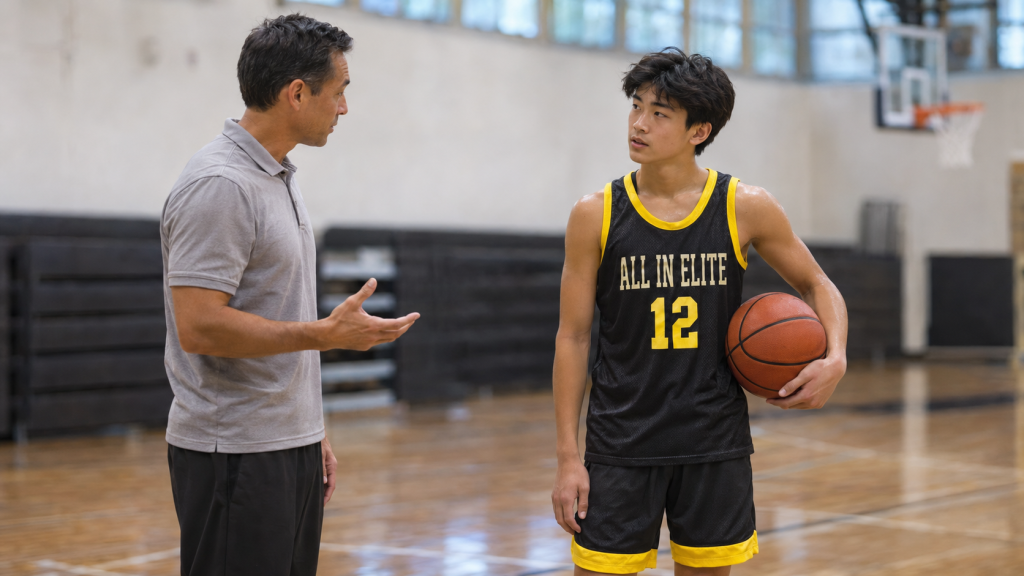
A fictional point guard listening to his coach during practice illustrates the question of how do college basketball coaches check character.

A player’s reputation develops through everyday interactions with coaches, including how they listen to feedback and respond to instruction.

My advice to players is to ask your current coach for an honest assessment. Where could you improve as a teammate? How do you respond to coaching? Is your effort consistent?

You might hear something you weren’t expecting, but that’s useful information while you still have time to act on it.

If a college coach picked up the phone tomorrow and asked your current coach about your character, what would they say?

The best way to earn a strong character reference is to give someone a season’s worth of reasons to recommend you.
PODCASTS

Dan Krikorian: College Coach & Founder of Slappin’ Glass | What College Coaches Look for in Players

What do college coaches actually look for when recruiting players? Chapman University head coach Dan Krikorian joins Cory Heitz to discuss basketball IQ, recruiting beyond statistics, Division 3 basketball, and choosing the right college program.

Dan Sullivan: HC of Worcester Academy Girls Basketball | Reclassing or a Post-Grad Year for Girls?

Should girls basketball players reclass or take a post-grad year? Worcester Academy head coach Dan Sullivan joins Cory Heitz to discuss recruiting timelines, college exposure, player development, and how families can choose the right prep school path.

2026 Prep School Basketball Landscape | College Recruiting & Exposure Changes

Explore the 2026 prep school basketball landscape with Cory Heitz, including college recruiting changes, exposure, June showcases, and choosing the right fit.

Rob Roy: HC of Rectory School Basketball | Junior Boarding School Basketball Recruiting

Rob Roy of Rectory School Basketball explains junior boarding school recruiting, reclassing, development, fit, and preparing players for prep school.

Ryan Silver: Founder of All In Elites | Transfer Portal and High School Recruiting

Ryan Silver shares how All In Elite helps players at every level navigate recruiting, development, AAU, and the changing college basketball landscape.

Tara Brisson: HC of Tilton Women’s Basketball | Developing the Whole Student Athlete

Tara Brisson of Tilton School Basketball shares how she develops student-athletes, prepares players for college, and helps families find the right fit.

Austin Burnette: HC of Hargrave Basketball | Development Through Elite Basketball Competition

Hargrave Basketball coach Austin Burnette explains how elite competition, earned minutes, and deep rosters prepare players for college.

Joe O’Shea: Head Coach of The Kiski School on Reclassing, Recruiting & Development

Joe O’Shea of The Kiski School discusses reclassing, recruiting, player development, playing time, and preparing athletes for college basketball.

Mike Foustoukos: Lawrence Academy Basketball HC on Reclassing, D1 Guards & NCAA Changes

Lawrence Academy Basketball coach Mike Foustoukos discusses reclassing, D1 guard development, college fit, and NCAA eligibility changes.

Bryce Daley: Coach of Salisbury on How to Get Recruited for Basketball and Post-Grad Years

Bryce Daley, coach at Salisbury School, shares how to get recruited for basketball, what families should know about a post grad year for basketball, and how prep school can help players prepare for college.

ARTICLES

Basketball coach reviewing college options with a high school basketball player and parent near a gym.

How Prep Coaches Find the Right College Basketball Fit

Finding the right college basketball program involves more than athletic opportunity. Lawrence Academy coach Mike Foustoukos explains how academic interests, roster research, and college-coach conversations shape his placement process.

College Coaches Talk About Recruits: Why It Matters

College coaches talk about recruits across programs and levels. Coach Alex Popp explains how a coach watching someone else may notice you—and help another staff discover you.

Tara Brisson: HC of Tilton Women’s Basketball | Developing the Whole Student Athlete

Tara Brisson of Tilton School Basketball shares how she develops student-athletes, prepares players for college, and helps families find the right fit.

How to Find Your College Basketball Level and Role

Making a college roster and being ready to help that team win are different standards. Coach Joe O’Shea explains how an honest evaluation of contribution—not prestige—can reveal a player’s real college basketball level.

Inside MAI: A New Model for Prep Basketball

Inside MAI’s new prep basketball model, built around player development, academics, recovery, college placement, and the full student-athlete experience.

The NCAA’s New Rule: What Players and Parents Need to Know

Learn how the NCAA’s proposed 5-and-5 rule could impact recruiting, NIL, transfers, post-grad years, and college athlete eligibility.

What Prep Schools Really Look for in Basketball Recruits in 2026

Discover what prep school basketball coaches really look for in recruits in 2026. St. George’s coach Dwayne Pina shares insights on player development, Ivy League recruiting, AA prep basketball, the transfer portal, and what separates Division I athletes.

How Prep School Can Change a Player’s Recruiting Path

How one prep school year transformed Antonio Anderson’s recruiting path, and why the right environment can change everything for overlooked players.

Prep school basketball guard handling the ball in a packed gym with text explaining what it takes to become a Division I guard in 2026.

What It Takes to Be a D1 Guard in 2026

A D1 coach details the skills, habits, and mindset college staffs demand from point guards, from pick-and-roll IQ to defense, film study, and leadership.

Prep school basketball player in game action with bold text reading “Coach’s Model: Wait or Commit,” highlighting a recruiting decision framework.

Post-Grads: Commit or Wait? A Coach’s Model

Former D1, NBA, and Ivy League coach breaks down modern recruiting, NIL realities, early commitments, best-fit schools, and smart paths families miss.

FIND YOUR FIT

Find Your Fit

Get Your Free Personalized Prep School Assessment

Finding the right prep school basketball opportunity starts with understanding your complete situation. Our free assessment collects key information about your athletic abilities, academic standing, and financial considerations to provide targeted guidance specific to your circumstances. This approach allows us to cut through the recruitment noise and give you honest, practical feedback about your options. Most families find that this comprehensive evaluation saves them time and helps avoid mismatched programs that waste valuable development years.

QUESTIONS?

Questions?

Fill out the form below, and we’ll get back to you within 24-48 hours, or feel free to reach out via email to cory@prepathletics.com. We look forward to hearing from you!

Fill out the form below, and we’ll get back to you within 24-48 hours, or feel free to reach out via email to cory@prepathletics.com. We look forward to hearing from you!