When I had Ryan Silver, founder of All In Elite Basketball, on the PREP Athletics Podcast, he shared an example of what can happen behind the scenes in college basketball recruiting.
“There’s a kid recently that decommitted from a school and I had head coaches at some of the top schools in the country calling me, just asking for character references.”
If you’ve ever wondered whether college basketball coaches check character when evaluating recruits, Ryan’s experience gives you a clear answer. What another coach can tell them about you goes well beyond what they see during a game.
What College Coaches Notice Beyond Basketball Skill
I asked Ryan what college coaches notice when watching a game that players and parents might overlook. His first answer was toughness. He also talked about players who don’t play hard and have bad attitudes.
Toughness isn’t just about being physical or playing through contact. It’s also about how you compete when things aren’t going your way.
Two players can have equally bad shooting nights. One gets frustrated, stops getting back on defense, and becomes disengaged. The other keeps defending, encourages his teammates, and looks for different ways to help his team win.
Neither player is shooting well, but they’re giving a college coach two very different things to evaluate.
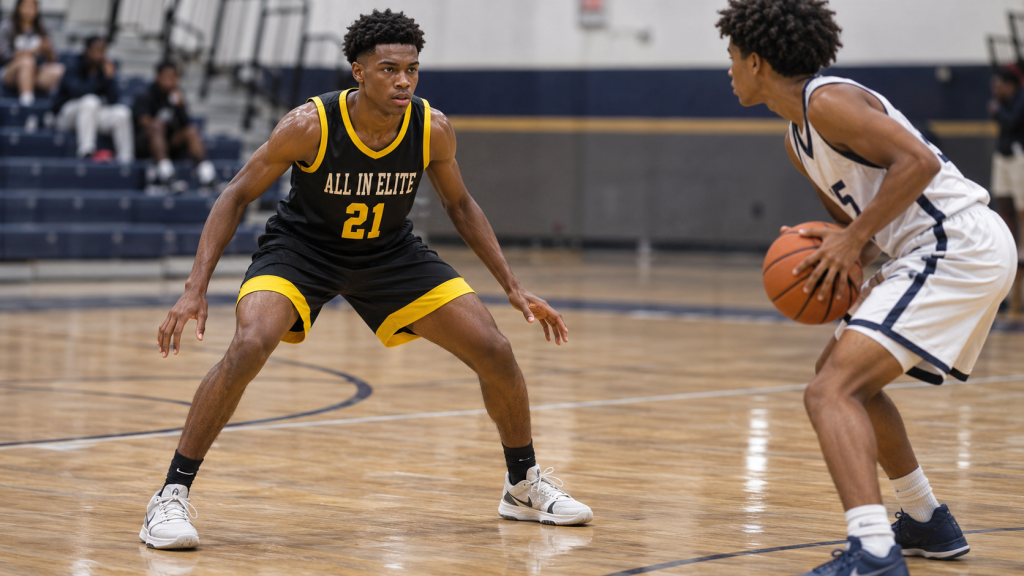
Even when shots aren’t falling, defensive effort and emotional composure give college coaches something meaningful to evaluate. (Illustrative scene.)
Effort, emotional composure, and coachability are among the qualities basketball evaluators look for when assessing talent. These qualities help a coach assess how a player might handle the demands of college basketball, particularly when their role or playing time changes.
Ryan places as much importance on who a recruit is as a person as he does on who they are as a basketball player.
How Do College Basketball Coaches Check Character?
“You know, your attitude will carry with you,” Ryan said.
A college coach might watch you play for an afternoon. Your high school, AAU, or prep school coach gets to see you over an entire season.
They see how you respond when your minutes get cut, how you handle criticism, how you practice after a tough loss, and how you treat teammates who aren’t as talented as you.
Those are things that don’t always come through on a highlight reel.
Basketball is a relationship-driven business. When college coaches talk about recruits, a character reference from someone who knows the player well can provide context that a scouting visit alone cannot.
A bad attitude can hurt your recruitment, even if you’re talented. If a coach is deciding between two players with similar abilities, concerns about one player’s reliability or willingness to be coached can become another factor in that decision.
A strong reputation, on the other hand, gives a coach another reason to feel confident about bringing you into their program.
Why Character and Leadership Matter Especially for Guards
When I asked Ryan what it takes to play Division I basketball as a guard, he emphasized toughness, feel for the game, and leadership. He also made his expectations about character clear:
“Everyone wants a high character point guard or guard on their team.”
As a point guard, you’re helping organize the offense, communicating with teammates, recognizing defensive adjustments, and making decisions under pressure.
When a teammate misses a defensive assignment, a guard can dwell on the mistake or help make sure everyone knows the adjustment before the next possession.
Leadership doesn’t require being the loudest person in the gym or the leading scorer. A quieter player who makes good decisions, communicates effectively, and remains composed under pressure can be an excellent leader.
For a guard, these qualities complement basketball skill. They help that player get more out of the other four people on the floor.
How Players Can Build the Reputation They Want
I also asked Ryan whether toughness can be taught.
“I think you can teach levels of toughness. I think you can teach structure and discipline.”
Ryan used his own life as an example. As he’s gotten older, he’s developed healthier habits and become more disciplined in his daily routine.
The same principle applies to basketball development. A player who struggles with consistency can establish better practice habits. Someone who gets defensive when corrected can work on listening to feedback and applying it on the next possession.
These improvements don’t require a college coach to be sitting in the stands. In fact, an ordinary Tuesday practice is a great opportunity to work on them.
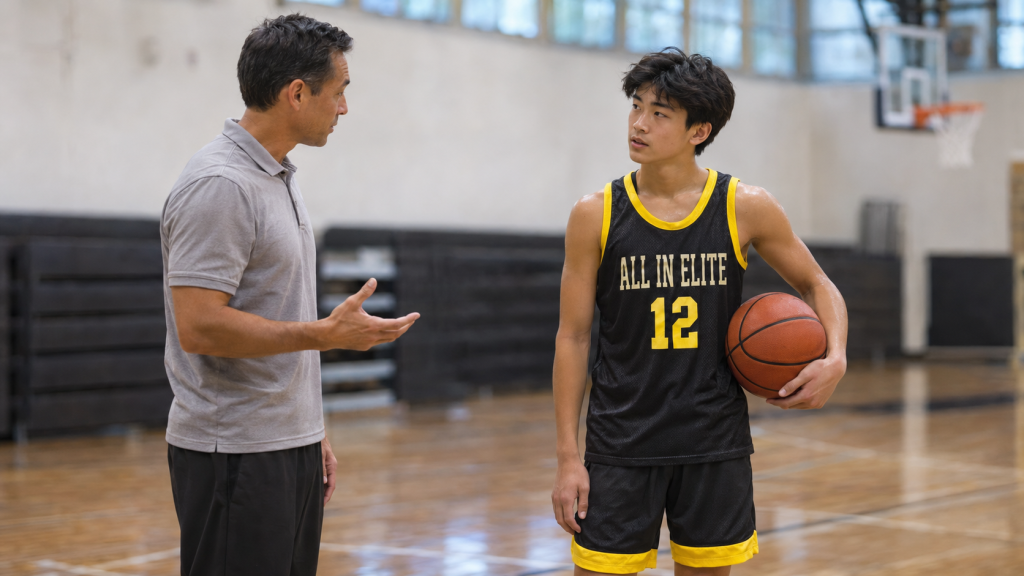
A player’s reputation develops through everyday interactions with coaches, including how they listen to feedback and respond to instruction.
My advice to players is to ask your current coach for an honest assessment. Where could you improve as a teammate? How do you respond to coaching? Is your effort consistent?
You might hear something you weren’t expecting, but that’s useful information while you still have time to act on it.
If a college coach picked up the phone tomorrow and asked your current coach about your character, what would they say?
The best way to earn a strong character reference is to give someone a season’s worth of reasons to recommend you.